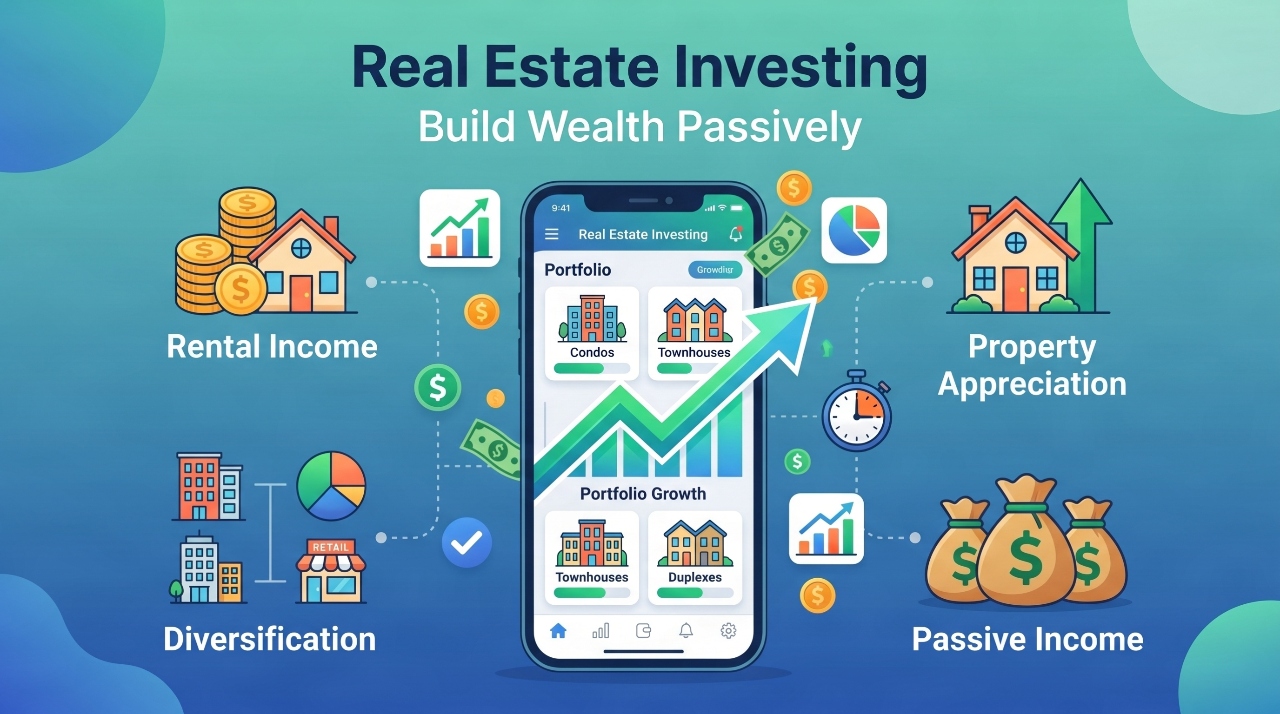
Over 2 million Americans now use apps to invest in real estate. That number keeps growing every year. Five years ago, you needed a lot of money and a real estate agent to start buying properties. Today, you can invest in real estate from your phone in just a few minutes.
A real estate investing app is software that helps you buy properties, track investments, and manage rentals. These apps put powerful tools in your pocket. You get access to real estate deals, financial calculators, and market information that were once only available to professional investors.
The biggest benefit is simple: real estate investing apps make property investment accessible to regular people. You no longer need $100,000 to get started. You don’t need connections or years of experience. What you need is the right app and a willingness to learn.
This article will show you everything about real estate investing apps. You’ll learn what they are, how they work, and which ones actually deliver results. We’ll talk about real features, real money, and real risks. No fluff. Just honest information to help you decide if app-based real estate investing is right for you.
What Is a Real Estate Investing App?
A real estate investing app is a mobile or web-based platform that helps you participate in property investments. Think of it as a middleman that connects your money to real estate opportunities. Instead of buying a whole building yourself, these apps let you invest in pieces of properties owned by other people or companies.
These platforms started becoming popular around 2013. That’s when rules changed to allow regular people to invest in real estate without huge amounts of capital. Before that, only wealthy investors and companies could do this kind of thing.
Real estate investing apps do several important jobs. They find investment opportunities and show them to you. They handle the boring paperwork and legal stuff. They collect your money along with money from other investors. Then they buy properties or fund real estate projects. After that, they manage everything and send you profits when the property makes money.
The app itself is usually very simple to use. You download it on your phone or visit their website. You create an account, answer some questions about your experience, and verify your identity. Then you can start looking at available investments. When you find something you like, you enter how much money you want to invest. The app handles everything else.
Think of it like putting money in a vending machine. You put in your cash, select what you want, and the machine delivers. Real estate apps work the same way but with property instead of snacks. The results take longer to come, but the money you get back is usually much bigger.
Types of Real Estate Investing Apps
Different real estate investing apps focus on different investment types. Knowing the difference helps you pick the right one for your goals.
Crowdfunding Platforms
Crowdfunding real estate apps let many people pool their money together to invest in bigger projects. A developer might need $2 million to build apartments. They use a crowdfunding app to get money from 200 investors putting in $10,000 each. You get returns after the project is finished, usually within two to five years.
Popular crowdfunding apps include Fundrise, RealtyMogul, and CrowdStreet. These platforms invest in everything from apartment buildings to office space to storage facilities. Your minimum investment is usually between $500 and $5,000.
Rental Property Management Apps
If you already own rental properties, these apps help you manage them. They track rent payments, maintenance requests, and tenant information. Apps like Landlord and AppFolio make it easy to be a landlord without the headaches. You can collect rent automatically and connect with contractors who fix problems.
Real Estate Investment Trusts (REITs)
REITs are companies that own real estate and pay investors from their profits. REITs apps let you buy shares in these companies just like stocks. You get to own a piece of real estate without owning an actual building. The money comes from the app’s commission when you buy or sell shares.
Investing in REITs is simple. You pick a company you like, decide how much money to invest, and buy shares. Companies like Vanguard and Fidelity have REIT options. Some apps focus only on real estate while others include REITs alongside other investments.
House Flipping and Wholesaling Apps
Some apps connect investors with properties that need repair. Wholesalers find houses at discount prices and sell them to investors who fix them up and resell for profit. Apps like Connected Investors and Bigger Pockets show you these deals in your area. You need more money and knowledge for this type, but the profits can be huge.
Private Lending Apps
These platforms let you lend money to real estate investors. You’re basically a bank. An investor needs $50,000 to buy a property, borrows from you through the app, and pays you back with interest. You make money from the interest, usually between 8 percent and 15 percent per year.
Key Features That Matter
Not all real estate investing apps have the same features. Some are packed with tools while others keep things simple. Understanding what actually matters helps you choose wisely.
User Friendly Interface
The best apps are easy to use. You should be able to find information without clicking through five different screens. The app should load quickly and not crash. Text should be clear and easy to read. Charts should make sense. If an app is too complicated, you’ll waste time figuring it out instead of making money.
Test drive the app before you invest real money. Most platforms let you look around without signing up. Spend 10 minutes clicking around and see if it feels comfortable. If it frustrates you in 10 minutes, it will frustrate you even more when you’re handling your own money.
Detailed Property Information
Good apps show you everything about an investment before you hand over money. You should see the property location, the total project cost, and how much money they’ve already raised. Look for information about the people running the deal. Who is the developer? Do they have experience? Have they completed other projects successfully?
The best real estate investing apps also show you the risks. They’re honest about what could go wrong. Maybe the project could take longer than expected. Maybe the rental rates could be lower. A platform that only shows good news is hiding problems.
Performance Tracking
You need to know how your money is doing. Good apps show you real time updates on your investments. You should see exactly how much money you have invested, how much you’ve made, and when you’ll get paid. Some apps let you track your entire portfolio across multiple investments.
Educational Content
Real estate investing is complicated if you don’t know what you’re doing. The best apps teach you. They offer videos, articles, and webinars about real estate investing. Some have communities where investors help each other learn. This education helps you make smarter decisions with your money.
Customer Support
Things go wrong sometimes. Your account might have a problem. You might have questions about an investment. Good apps answer your questions quickly. Check reviews to see if customers say the support team actually helps or just ignores people.
Security
Your money and personal information need protection. Good apps use encryption to protect your data. They should have insurance for customer funds. Check if they’re registered with the SEC or other government agencies. These registrations mean they follow rules designed to protect investors.
How These Apps Help You Make Money
Real estate investing apps don’t create money from nothing. They connect you to real estate deals where you can earn money. Understanding how you actually make money is important before you start.
Rental Income
When you invest in a rental property through an app, you get a share of the monthly rent. Let’s say 100 investors pool $10,000 each into a crowdfunding deal for apartment buildings. That’s $1 million total. The apartments rent for $2,000 per month for each unit. After paying for maintenance, property taxes, and management, there’s profit left. The app splits that profit among all 100 investors based on how much they invested.
You don’t have to manage anything. You don’t have to fix broken pipes or deal with tenant problems. The app handles all of that. Your money just sits there making money while you sleep. For many people, this is the best part of real estate investing apps. You get real estate returns without real estate work.
Property Appreciation
Real estate usually goes up in value over time. If an app invests in a property worth $5 million today, it might be worth $5.5 million in five years. That $500,000 increase gets split among investors. You might make $5,000 just because the property became more valuable.
Appreciation is long term money. You usually don’t see this profit until the property sells. But combined with rental income, appreciation makes real estate a solid way to build wealth.
Interest from Lending
If you use a private lending app, you make money from interest. You lend $10,000 to a real estate investor at 12 percent interest. That investor pays you back over one year. You get $1,200 in interest. Some lending apps pay interest monthly, so you get small payments throughout the year.
Interest is more reliable than waiting for property appreciation. You know exactly how much you’ll make. But interest rates are usually lower than potential profits from owning actual properties.
Buy Low Sell High
Some apps help you find properties at discount prices. Wholesalers identify buildings that need repair, contact the owner, and negotiate a low price. Then they sell the deal to a rehabber who fixes it up. The difference between what the wholesaler paid and what they sold it for is the profit. Apps make this easier by connecting wholesalers with rehabbers.
This type of investing takes more work and knowledge. You need to understand property values and repair costs. But the profits can be very high.
Dividends and Distributions
Some real estate apps work like stock investments. You own a small piece of a company that owns real estate. That company makes profits and pays dividends to shareholders. You get your share of those dividends automatically. It’s passive income that shows up in your account several times per year.
Popular Real Estate Investing Apps Explained
Several major platforms dominate the real estate investing app market. Let’s look at the most popular ones and what makes them different.
Fundrise
Fundrise is one of the oldest and biggest crowdfunding platforms. They started in 2012 and have grown significantly. Fundrise lets you invest in residential properties, commercial buildings, and development projects. Minimum investment is just $10, which is perfect for beginners.
Fundrise focuses on projects in major US cities. They’re transparent about their fees, charging 1 percent annually on your account value. You can invest in their diversified eREITs (electronic Real Estate Investment Trusts) or pick individual properties. The app is clean and easy to understand. They provide regular updates on each property.
One downside is that your money isn’t always liquid. You might need to wait months to get your money back if you want to sell. Their historical returns have been solid, usually between 8 and 10 percent annually.
Roofstock
Roofstock is different from crowdfunding apps. It’s a marketplace for buying rental properties online, kind of like real estate’s version of eBay. You can browse single family homes, condos, and multi-unit buildings for sale. Each listing shows rental income, expenses, and current tenant information.
This app is best if you want to actually own properties directly. You need more money to get started because you’re buying whole properties or portions of them. But you have more control over what you buy.
Roofstock vets the properties and provides inspection reports. They also help with financing through partner lenders. The app makes buying out-of-state properties easier than traditional real estate investing.
Rich Uncles
Rich Uncles focuses on syndicates, which are deals where multiple investors own a property together. You can start investing with as little as $500. Rich Uncles concentrates on residential properties across the United States.
Their app is straightforward. You can see all active deals, review each property, and choose which ones you want to fund. They provide detailed information about each property, the developer, and the expected returns. Typically, Rich Uncles targets deals that pay 8 to 12 percent annually.
Propy
Propy is for people who want to buy property internationally. You can purchase real estate in countries like Ukraine, Portugal, and Costa Rica through their app. They handle the legal paperwork and currency conversion.
This app is more advanced and best for experienced investors. But it opens doors to properties in countries where values are cheaper and potential appreciation is higher.
Bigger Pockets
Bigger Pockets is more of a community and educational platform than an investment marketplace. It’s designed for people who want to learn about real estate investing and connect with other investors. You get access to podcasts, articles, and forums where experienced investors answer questions.
While you can’t directly invest through Bigger Pockets, it helps you learn before you use other apps. Many investors use it alongside crowdfunding or management apps.
Orion Income Fund
Orion focuses on income-producing properties. They invest in office buildings, retail spaces, and apartment complexes. Minimum investment is typically $2,500. Orion targets returns between 7 and 10 percent annually.
Their app provides quarterly reports on each investment. You can see exactly how much money you’ve made and when distributions will arrive. They also offer tax documents automatically at the end of the year.
Getting Started: Your First Steps
Starting with real estate investing apps is simpler than you might think. But there are smart ways to do it and not-so-smart ways.
Learn the Basics
Before you invest a single dollar, spend time learning. Read articles on Bigger Pockets. Listen to real estate podcasts. Watch YouTube videos about crowdfunding and rental property investing. You don’t need to become an expert, but you should understand basic concepts like cap rates, cash on cash returns, and how appreciation works.
Understanding these basics protects you from bad deals. When you see an investment promising 20 percent returns, you’ll recognize that as unrealistic. When an app asks about cap rates, you’ll know what they mean.
Pick Your Investment Type
Different real estate investing apps serve different purposes. Ask yourself what you want. Do you want completely passive income where you don’t have to do anything? Use a crowdfunding app. Do you want to own rental properties and have more control? Use Roofstock or a marketplace app. Do you want to lend money and earn interest? Try a private lending platform.
Be honest about how much time you want to spend. Owning property directly takes more work than crowdfunding. Managing tenants takes more work than clicking a button and getting paid.
Check the Company
Before you give an app your money, research the company. How long have they been around? You want at least three years of history. What do reviews say? Check both the app store reviews and independent review sites. Are they registered with the SEC? This matters for crowdfunding platforms.
Look up who runs the company. Real estate investors and professionals should be running these platforms, not random tech people with no real estate experience. If you can’t find information about the leadership team, that’s a red flag.
Start Small
Don’t put all your money into the first app you find. Start with a small amount, maybe $1,000 or $2,000. This helps you learn how the platform works without risking too much. You’ll see how they communicate with you, how transparent they are, and whether the returns match what they promised.
After three or six months, you’ll have real data. You’ll know if this app is worth more investment.
Diversify
Don’t put all your money into one investment or one app. Spread your money across different platforms and different types of deals. Maybe invest $5,000 on Fundrise, $5,000 on Roofstock, and $5,000 on a private lending app. This way, if one platform has problems, you don’t lose everything.
Diversification is how smart investors reduce risk. It’s also how they smooth out returns over time.
Track Everything
Keep records of every investment you make. Write down how much you invest, when you invested it, what the expected returns are, and when you expect to get paid. Check your account regularly to see how things are doing. At the end of the year, compile all your returns. This helps you understand which investments are actually working.
Most good apps let you download reports and statements. Use these tools to track your performance over time.
Common Mistakes New Investors Make
Learning from other people’s mistakes saves you money and frustration.
Chasing High Returns
If an app promises 25 percent returns while others offer 8 to 10 percent, something’s wrong. High returns come with high risk. You might make a lot of money or lose it all. New investors often get excited about high returns and forget about risk.
Real estate investing returns are usually between 6 and 12 percent annually. That’s good money over time. Returns higher than 15 percent should make you very cautious.
Not Reading the Fine Print
Real estate deals have details that matter. How long until you get your money back? What happens if the project fails? Are there fees you don’t know about? Some investors skim through documents and miss important information. Then they’re surprised when something unexpected happens.
Take time to read every page of the offering documents. If you don’t understand something, ask. Don’t invest until you’re comfortable with all the details.
Putting in Too Much Too Fast
New investors sometimes get excited and invest all their savings. That’s dangerous. Real estate investments aren’t liquid. You can’t quickly get your money back. If you invest everything and then need cash for an emergency, you’re in trouble.
Only invest money you won’t need for at least three to five years. Keep an emergency fund separate.
Not Understanding Your Timeline
Real estate returns take time. You won’t get rich in three months. But many new investors expect quick profits. Then they panic when returns don’t come immediately. Understanding that real estate is a long-term game helps you stay patient and avoid selling at the wrong time.
Ignoring Your Taxes
Real estate investments produce income and you owe taxes on them. Some investors forget to set aside money for taxes. Then at tax time they’re shocked. Work with a tax professional who understands real estate. Know what to expect before tax season arrives.
Not Diversifying
Putting all your money into one app or one deal is risky. Even if the platform is good, that specific deal might fail. Spread your money around. This reduces your overall risk and helps you sleep better at night.
Conclusion
Real estate investing apps have changed how regular people build wealth through property. You no longer need to be rich or connected to get started. You no longer need to spend years learning or managing property yourself. A good app puts real estate investing in your pocket.
The best real estate investing apps make money for their users by connecting them to quality deals. They handle paperwork and management. They provide transparency about performance. They educate you so you can make smart decisions.
Starting is simple. Pick an app that fits your goals. Start with a small amount of money. Learn as you go. Diversify across platforms and deals. Track your performance. Be patient. Over years, your money can grow significantly.
Real estate investing isn’t get-rich-quick. But it is a proven way to build long-term wealth. Apps make it more accessible than ever before.
Ready to start building wealth through real estate?
Download one of the apps mentioned in this article today. Spend 30 minutes exploring. Read the educational materials. See how it feels. Your future self will thank you for taking this step now.