Real estate can pay you while you sleep. That is the main benefit. A rented home or apartment can put money in your bank each month, even when you are at your day job, on vacation, or asleep.
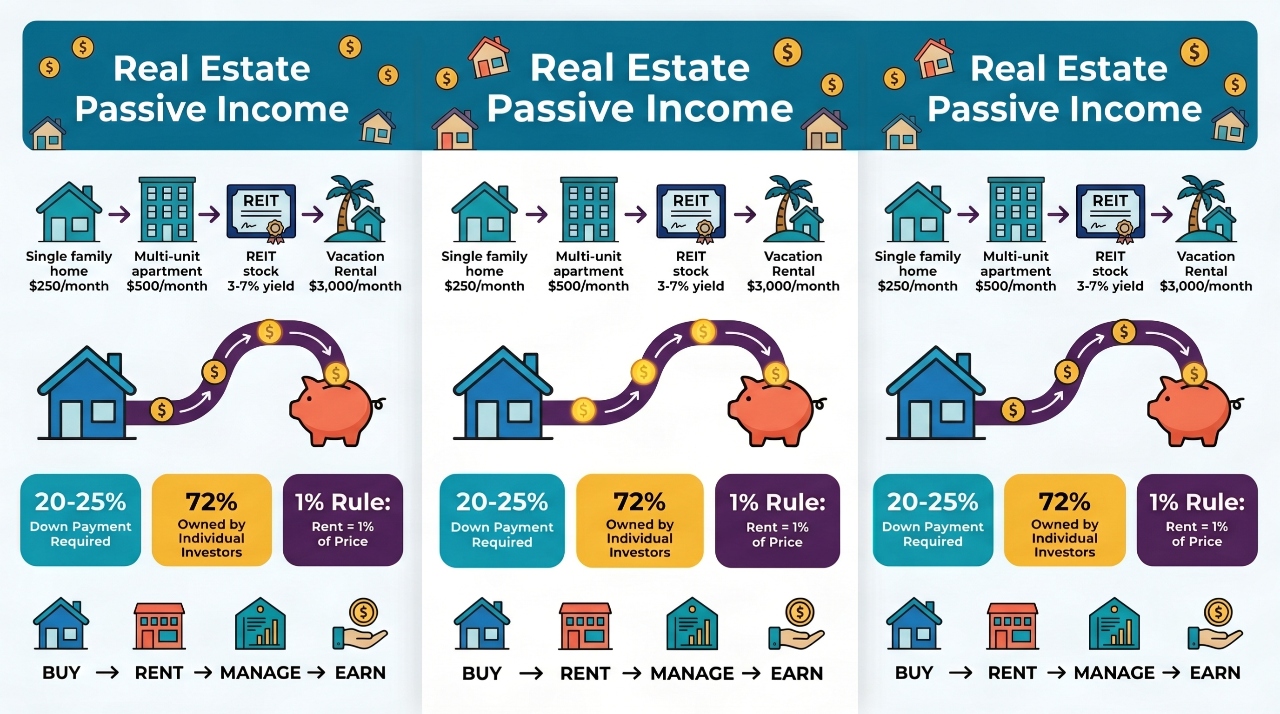
Census data shows that individual investors own about 72% of rental properties in the United States. This means real estate is not just for the rich. Small investors already do it. You can learn how to invest in real estate for passive income without becoming a full time landlord.
This guide will show you the best ways to start. You will see real numbers, honest risks, and clear steps. By the end, you will know which path fits your money, your time, and your goals.
Why Real Estate Is a Strong Source of Passive Income
Real estate passive income comes from four main sources. Rent is the big one. A tenant pays you each month. After bills, the leftover money is yours.
Properties can also grow in value. A home worth $200,000 today may sell for more later. You do not need to sell to benefit. Equity gives you power to borrow, buy more, or hold for safety.
Tax rules can help too. Depreciation lets you write off part of the building each year. Many expenses count as deductions. Talk to a tax pro before you count on any specific benefit.
How Much Money You Really Need
You need less than most people think, but you do need something. A rental loan often asks for 20% to 25% down. On a $150,000 home, that is $30,000 to $37,500.
You also need cash for closing, repairs, and reserves. Add about 5% to 10% more for safety. Empty pockets lead to panic when the water heater breaks.
House hacking can cut the start cost. Some loans let you buy a duplex with 3.5% down if you live in one side. REITs and crowdfunding can start with $100 to $1,000. You can check current mortgage rates at freddiemac.com/pmms.
Single Family Rentals: A Simple Place to Start
A single family home is the easiest place to start. One door means one tenant, one lease, and one set of bills. It is simple to learn.
Look for homes where rent covers the mortgage, taxes, insurance, repairs, vacancy, and management. If the rent is $1,800 and total costs are $1,550, you keep $250 each month. That is cash flow.
Good location matters more than pretty paint. Good schools, low crime, jobs, and public services attract stable tenants. Drive the street at night before you buy.
New investors often skip the reserve fund. Do not do that. Keep six months of expenses in a separate account. One bad roof or one empty month should not end your plan.
Small Multifamily Properties: More Rent in One Deal
Small multifamily means two to four units. It is still a residential loan in most cases. That makes it easier than big apartment buildings.
More units mean more rent. If one tenant moves out, the others still pay. This lowers the shock of vacancy. A triplex with $700 per unit brings $2,100 a month.
Live in one unit and rent the rest. This is house hacking with a small apartment building. Your tenants may cover your mortgage. Then you save faster for the next buy.
House Hacking: Let Your Home Help Pay for Itself
House hacking means your home pays part of itself. Rent the basement, a spare room, or a garage apartment if local rules allow it.
FHA loans can help first time buyers put down 3.5%. You must live in the property for about a year. After that, you can move out and rent your old unit.
This is active at first. You will share space or manage roommates. The payoff can be huge. Living for free or close to it gives you a fast start.
REITs: Passive Income Without Tenants
If you hate toilets, tenants, and midnight calls, REITs may fit you. A REIT is a company that owns income property. You buy shares like stocks.
You get paid through dividends. Public REITs often pay 3% to 7% each year. You can start with the price of one share. Selling is faster than selling a house.
You give up control. You cannot pick the tenant or paint color. Fees and market mood can lower share prices. Still, REITs are one of the most passive ways to earn real estate passive income. Read more about REITs at reit.com.
Crowdfunding: Join Bigger Deals with Less Cash
Real estate crowdfunding lets you join a property deal online. You put money in with many other investors. A sponsor runs the project.
Some sites need you to be an accredited investor. Others accept smaller accounts. Read the fine print. Lockup periods are common. You may not get your money back for three to seven years.
Returns can look strong. Losses happen too. Stick with sites that show clear fees, clear plans, and clear past results. Never invest money you cannot afford to lose.
Short Term Rentals: Higher Income, More Work
Airbnb style rentals can earn more per night than long term leases. A cabin near a lake or a condo near a hospital may do well. Location rules everything.
Cities often have strict rules. Some ban short term rentals. Some require permits, taxes, and safety checks. Ignoring local law can wipe out your profit.
Furnishing costs add up. Cleaning, photos, guest messages, and reviews need time. Many owners hire managers and pay 20% to 30% of income. Be honest about the work before you call it passive.
The BRRRR Method: Build Faster With Caution
The BRRRR method stands for buy, rehab, rent, refinance, repeat. It can grow your money fast if the numbers work. It can also hurt you if they do not.
You buy a fixer home below market value. You repair it to raise rent and value. You rent it to a stable tenant. Then you refinance and pull cash out to buy the next one.
The danger lies in bad rehab guesses and low appraisals. Always get quotes, not guesses. Keep extra cash for surprises. This method needs skill, so learn before you leap.
How to Find the Right Property
Start where you know. Your own city gives you an edge. You understand the streets, schools, and rent levels.
Use the one percent rule as a quick test. Monthly rent should be at least one percent of the buy price. A $200,000 home should rent for $2,000 or more. This is not law, but it helps you spot bad deals fast.
Check cap rate and cash on cash return next. Cap rate shows income without debt. Cash on cash shows your actual cash return after financing. Learn both before you offer.
Count the Real Expenses Before You Buy
Rent is not profit. Many new investors learn this the hard way. Count every real cost before you celebrate.
Mortgage, taxes, insurance, repairs, vacancy, management, and capital expenses all matter. Maintenance often costs about one percent of the home value per year. A $200,000 home may need $2,000 yearly for upkeep.
Vacancy can eat five to eight percent of yearly rent. Property managers often charge eight to ten percent of rent collected. Capital expenses include roofs, heat systems, and appliances. Build these into your offer.
Financing Options for Rental Property
Conventional loans are common for rentals. Rates are often higher than owner occupied loans. Lenders want reserves and solid credit.
Portfolio lenders can be more flexible. Hard money loans cost more but close fast. Seller financing can skip banks entirely. Partners can bring cash while you bring time or skill.
A home equity loan on your main home can fund a down payment. This adds risk. If rents drop, you still owe two loans. Be careful and run worst case numbers.
Tenants and Management Make or Break the Deal
Good tenants make passive income feel passive. Bad tenants make it feel like a second job. Screen carefully and follow fair housing law.
Ask for income that is three times the rent. Check credit, criminal history, and past landlord references. Call the old landlord, not just the current one.
Self management saves money. A property manager buys back your time. Choose based on your location, personality, and day job demands. Long distance landlords usually need help.
Tax Benefits That Can Help You Keep More Income
Tax rules can help rental investors keep more income. Depreciation lets you deduct part of the building over many years. Mortgage interest and property taxes may also lower taxable income.
You can write off repairs, management, insurance, mileage, and some professional fees. A good CPA pays for itself. Bad record keeping costs you money.
A 1031 exchange lets you sell one rental and buy another while deferring tax on gains. Rules are strict and deadlines matter. Find tax rules at irs.gov.
Common Mistakes New Investors Make
New investors often pay too much because they fall in love with a house. Fall in love with the numbers instead. Bad numbers do not improve with time.
Another mistake is skimping on inspection. A cheap inspector can hide $20,000 in pain. Hire someone who checks roofs, sewer lines, electric, and foundations.
Some investors buy with no reserves. One repair then becomes a credit card crisis. Keep cash boring and safe. Boring cash keeps deals alive.
Build at the Speed That Fits Your Life
Start with one property. Learn the real work. Then add another when the first one runs smooth.
Real estate is not fully passive at first. Even REITs need research. Physical rentals need systems or good help. Pick the level of work that fits your life.
If you have little cash, start with REITs or crowdfunding. Want a home? Try house hacking. Need more control? Buy a rental. Action beats waiting.
Start Small and Let the First Property Teach You
Real estate passive income can change your money life. It can pay you monthly, build equity, and offer tax help. It also takes cash, study, and honest risk control.
You do not need to buy ten buildings this year. You need one good first step. Pick a path. Run real numbers. Talk to a lender, a CPA, or a local investor this week.
The best time to learn how to invest in real estate for passive income was years ago. The next best time is now. Start small, stay careful, and let your first property teach you.