Here’s a scary fact: The average American credit card holder carries a balance of around $6,000. That number might not seem huge until you realize what happens when people only pay the minimum each month. A typical minimum payment might be just 1% to 3% of what you owe. For someone with a $6,000 balance, that’s only $60 to $180 per month. Sounds manageable, right? Wrong. When you only pay the minimum, you’re actually agreeing to a deal that banks love but your wallet will hate.
Most people think minimum payments are helpful. They assume the credit card company is being kind by letting them pay such a small amount. The truth is different. Banks make more money when you pay slowly. By understanding how credit card minimum payments really work, you can take control of your debt and stop throwing money away on interest charges.
What Is a Credit Card Minimum Payment?
A credit card minimum payment is the smallest amount you need to pay each month to keep your account in good standing. Your credit card company sets this amount and includes it on your monthly statement. It typically ranges from 1% to 3% of your total balance, plus any interest charges and fees from the previous month.
Let’s say you have a $5,000 credit card balance with a 20% annual interest rate. Your minimum payment might be around $150. That amount isn’t enough to pay down your debt meaningfully. Most of that $150 goes toward interest charges rather than reducing what you actually owe. This is the trap that keeps people stuck in debt for years.
Your minimum payment increases if you have late fees or penalty interest rates. It also changes if your balance grows. The credit card company wants you to at least cover the interest they’re charging. They definitely don’t want you to skip payments entirely because that triggers late fees and damage to your credit score. But they’re perfectly happy if you pay just enough to avoid these consequences while the rest of your balance sits there collecting interest.
How Your Minimum Payment Gets Calculated
Credit card companies use different methods to calculate minimum payments, but most follow a standard formula. The calculation includes several parts: a percentage of your balance, your interest charges, and any fees you’ve been charged.
The basic formula looks like this. First, the company takes 1% to 3% of your current balance. Then they add the interest you’ve accrued during this billing cycle. Finally, they add any late fees, over limit fees, or other charges. The total of these three parts becomes your minimum payment.
Here’s a real example to make this clear. Suppose your balance is $4,000, your interest charges for the month are $65, and you have no fees. The minimum payment might be calculated as $4,000 multiplied by 2% (which equals $80), plus the $65 in interest, which gives you a total minimum of $145.
Different card issuers use slightly different percentages. Some use 1% of the balance plus interest. Others use 2% of the balance plus interest. A few use 3% to pay down debt faster. No matter the exact percentage, the key point is the same. Your minimum payment is deliberately designed to be a small fraction of what you owe. The credit card company knows you’ll probably accept it because it seems so affordable.
Why Banks Love When You Pay Minimum
Banks aren’t charities. They’re businesses designed to make money. When you pay only the minimum payment, they make significantly more money from you through interest charges. This is their favorite outcome because it lets them have it both ways. You stay current on your account, so you won’t default, but you’ll be paying interest for years.
Think about the economics from the bank’s perspective. If you pay off your $5,000 balance in full after one month, the bank makes only the interest for that single month. Maybe that’s $83 if your interest rate is 20% annually. But if you pay only the minimum, you might be paying interest for three to five years. Over that time, you could pay $3,000 to $4,000 in pure interest charges on that same $5,000 balance. The bank just made four to five times more money by doing absolutely nothing except charging you interest.
Banks also know that when people pay only minimum payments, they usually keep using the card. They might charge groceries, gas, or other items while paying off old debt. This means the balance never really drops. The person stays trapped in a cycle of spending and minimum payments. Banks love this cycle because it’s incredibly profitable.
The minimum payment structure also keeps you from seeing how bad the situation really is. If the minimum payment was $2,000 per month, you’d immediately realize how much debt you have. But $150? That feels fine until you realize you’ve paid $5,400 over three years and still owe $3,500. The slow, invisible nature of minimum payments makes them dangerous.
The Real Cost of Paying Only Minimum
When you pay only the minimum, you’re not just paying a little extra in interest. You’re paying a massive amount of extra money. Let’s look at concrete numbers to show you what this really means.
Imagine you have a $3,000 credit card balance with a 20% annual interest rate. If you pay the minimum of about $75 per month, here’s what happens. You’ll need approximately 75 months (that’s over six years) to pay off the debt. You’ll pay roughly $5,670 total. That means you paid $2,670 just in interest on a $3,000 purchase. You paid nearly 90% extra beyond the original debt.
Now compare that to a more aggressive approach. If you paid $150 per month instead, you’d be debt free in about 21 months. You’d pay roughly $3,170 total. That means you paid only $170 in interest. By paying twice the minimum, you saved $2,500 and paid off your debt three times faster.
This example shows the power of paying more than minimum. Even modest increases make a huge difference. The longer you stretch out your payments, the more interest accumulates. Credit card interest compounds monthly, which means you pay interest on your interest. It’s a vicious cycle that benefits only the bank.
For those with multiple credit cards, the situation becomes even worse. A person with three cards, each carrying $3,000 at 20% interest, and paying only minimums on each would pay roughly $8,000 in interest charges across all three cards. That’s money that could have gone toward a car, a down payment on a house, or an emergency fund. Instead, it simply enriches the credit card company.
How Long It Takes to Pay Off Debt
The time required to pay off a credit card balance depends on three main factors. These are your starting balance, your interest rate, and how much you pay each month. Understanding this relationship helps you see why minimum payments are such a bad deal.
Let’s use a few scenarios to show you the timeline. A $2,000 balance at 18% interest takes about 32 months to pay off if you pay $100 monthly. A $5,000 balance at 22% interest takes about 50 months to pay off with a $150 monthly payment. A $10,000 balance at 20% interest takes more than 100 months (that’s over eight years) if you’re only paying $200 monthly.
These timelines assume you don’t add any new charges to your card. In reality, most people add new purchases while paying off old debt. This extends the payoff timeline even further. Someone making new charges while paying minimum payments could spend a decade or more paying off their debt.
The interest rate makes a huge difference in how long repayment takes. Higher interest rates mean you pay more toward interest and less toward principal.Use a free credit card payoff calculator to see exactly how long your specific debt will take to eliminate. A $5,000 balance at 10% interest might take 40 months to pay with a $150 payment. The same $5,000 at 25% interest might take 60 months. That’s an extra five years simply because your interest rate is higher.
Many people don’t realize how long they’ll be paying if they stick with minimum payments. They think it will be a couple of years. When they hit year four or five, they become frustrated and discouraged. Some people give up on trying to pay down their debt at all, which makes the problem worse.
The Credit Score Damage
Paying only minimum payments doesn’t just cost you money in interest. It also damages your credit score, which costs you money in other ways. Credit scoring companies look at several factors, and minimum payments affect multiple areas.
Your credit utilization ratio is the percentage of available credit you’re using. If you have a $10,000 credit limit and a $6,000 balance, your utilization is 60%. Credit scores prefer utilization below 30%. When you pay only minimum payments, your utilization stays high because your balance drops slowly. This keeps your credit score suppressed month after month.
A lower credit score affects your financial life in many ways. If you apply for a car loan, a mortgage, or any other form of credit, lenders see that lower score. They’ll either deny your application or charge you a higher interest rate. A person with a 650 credit score might pay 2% to 3% more interest on a mortgage than someone with a 750 score. On a $300,000 home loan, that difference means tens of thousands of dollars in additional costs.
Insurance companies also check credit scores. Many states allow car insurance companies to use credit information when setting rates. A lower score can increase your insurance premium. Cell phone companies, utility companies, and landlords all check credit scores. A damaged credit score creates a ripple effect throughout your financial life.
The good news is that credit scores improve when you pay down your balances. Once you get your utilization below 30%, your score starts recovering. Paying more than the minimum payment accelerates this improvement. Within a few months of responsible payment behavior, your score can improve significantly.
Smart Strategies to Pay More Than Minimum
The solution to the minimum payment trap is straightforward. Pay more than the minimum whenever you can. Even small increases make a significant difference. Here are several practical strategies that actually work.
The extra payment method involves paying more than your minimum once per month. Instead of paying your $100 minimum, you pay $150. This costs you an extra $50 per month but cuts your payoff time by months or even years. Every extra dollar goes directly toward principal rather than interest, which maximizes the effect.
The snowball method works well if you have multiple credit cards. You list your debts from smallest to largest balance. You pay minimum payments on all cards except the smallest one. You put all extra money toward the smallest balance until it’s paid off. Then you apply that payment to the next card. This method feels rewarding because you eliminate one card quickly, which motivates you to continue.
The avalanche method is similar but targets the highest interest rate card first. You pay minimums on everything else but attack the card with the highest APR. This saves the most money on interest because you’re eliminating the most expensive debt first. The downside is it takes longer to eliminate a card, so it feels less rewarding than the snowball method.
The lump sum payment approach means putting any extra money toward your credit card. When you get a tax refund, a bonus at work, or inheritance, put a large portion toward your debt. Even a few hundred dollars reduces your balance significantly and cuts interest charges going forward.
| Strategy | Best For | Timeline Impact | Emotional Impact |
|---|---|---|---|
| Extra Payment | Any situation | Very effective | Steady progress |
| Snowball | Low motivation | Moderate | Quick wins feel great |
| Avalanche | Saving money | Highly effective | Less immediate reward |
| Lump Sum | Large windfalls | Very effective | Depends on windfalls |
The balance transfer option involves moving your balance to a card with a lower interest rate or a 0% introductory rate. If you can get 0% interest for 12 months, you can make more progress. Every dollar you pay goes toward the principal instead of interest. You need discipline to avoid adding new charges during this period, but it can be very effective.
When Minimum Payments Make Sense
While paying only minimum payments is generally a bad idea, there are rare situations where it might be your only option. It’s important to know the difference between a temporary situation and a permanent trap.
If you’re facing a genuine financial emergency, minimum payments let you keep your accounts in good standing while you handle the crisis. Maybe you lost your job or had a major medical expense. Paying the minimum keeps your account active and protects your credit score from delinquency. This gives you time to recover without additional damage. However, you should aim to pay more than minimum as soon as your situation improves.
Some people intentionally carry a small balance on a rewards credit card they pay off slowly. They receive cash back or points on their spending. If the rewards rate is higher than their interest rate, they come out ahead mathematically. For example, if your card offers 2% cash back and your interest rate is 12%, you might earn more in rewards than you pay in interest. However, this strategy only works if you’re disciplined enough to pay down the balance regularly. Most people shouldn’t attempt this because it’s too easy to spiral into debt.
Very low interest rate cards sometimes make sense to carry a small balance. If you have a 0% introductory rate lasting 12 months, carrying a balance briefly might work. Again, you need a clear plan to pay the balance before interest kicks in. If you hit that 12 month mark with a remaining balance, your interest rate will jump to the standard rate, which is usually high.
The reality is that for most people in most situations, there’s no good reason to pay only minimum payments. Even modest increases make a huge difference. If you’re in a situation where you can’t pay more than minimum, that’s actually a sign you need help. You might be spending too much, earning too little, or both.
Your Action Plan to Break Free
Breaking free from the minimum payment trap doesn’t require drastic measures. It requires a clear plan and consistent action. Here’s a practical roadmap you can start immediately.
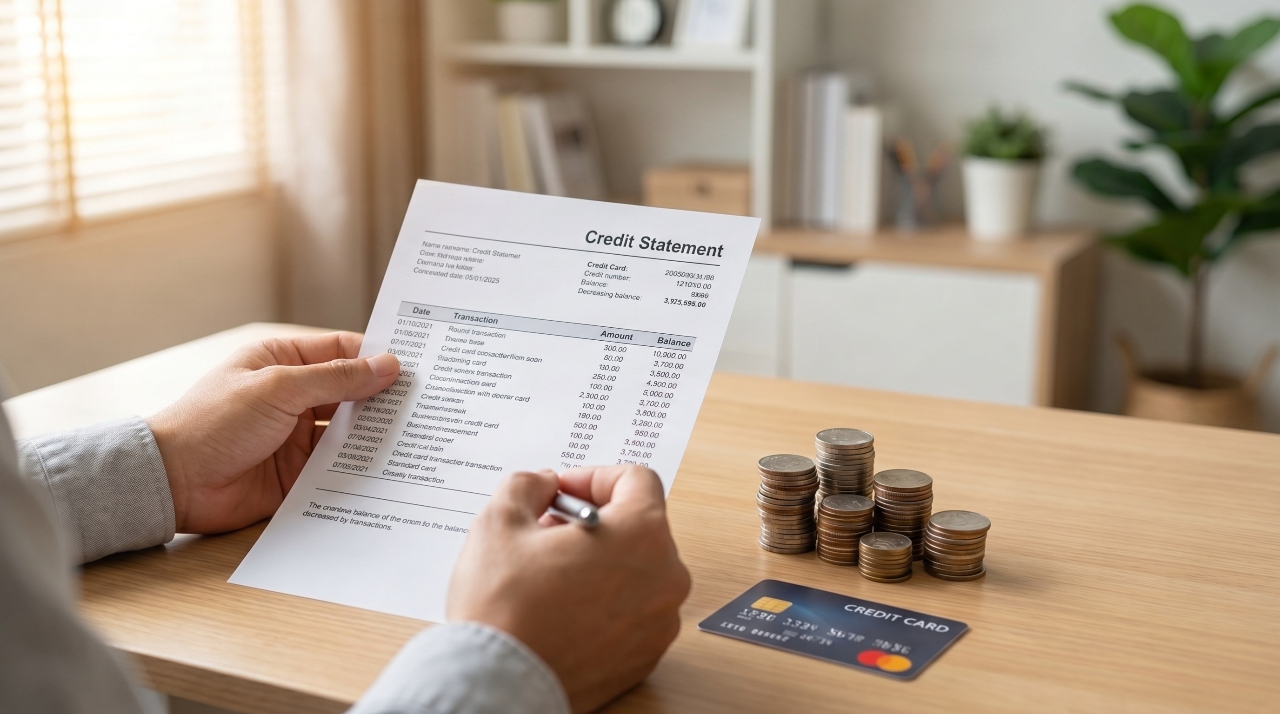
Step one involves understanding your exact situation. Pull out all your credit card statements. Write down the balance, interest rate, and minimum payment for each card. Calculate how much total interest you’d pay if you made minimum payments until the debt was gone. This number might shock you, and that’s good. Sometimes shock is what motivates change.
Step two requires choosing a payoff strategy. Decide whether you’ll use the snowball method, the avalanche method, or the extra payment method. Pick the approach that feels most doable for you. If you need motivation, the snowball method might work better. If saving money is your goal, the avalanche method is superior. The best strategy is the one you’ll actually follow.
Step three means finding extra money to pay toward debt. Look at your budget and find areas to cut. Cancel subscriptions you don’t use. Reduce dining out. Shop for cheaper car insurance. Sell items you don’t need. The goal is to find even an extra $25 to $50 per month. This seems small, but it adds up over time.
Step four involves creating a specific payment plan. Don’t just say “I’ll pay more.” Decide exactly how much more you’ll pay each month. Write it down. Set up automatic payments if possible. Put your plan somewhere visible so you see it every day.
Step five requires avoiding new debt while paying off old debt. This is critical. If you’re paying down your balance but adding new charges, you’re fighting a losing battle. Consider putting your cards away or removing them from your wallet. Use cash or a debit card instead.
Step six means tracking your progress. Watch your balance decrease each month. Celebrate milestones like paying off your first card or dropping below 50% of your original balance. Progress feels good and motivates you to keep going.
Conclusion
Credit card minimum payments are a designed trap, not a helpful feature. Banks benefit enormously when you pay only minimum amounts, but you lose thousands of dollars in interest charges. A person paying minimum on a $5,000 balance could spend an extra $2,500 in interest compared to someone who pays aggressively.
The good news is that you have control over this situation. Paying even modest amounts above the minimum makes an enormous difference. An extra $50 or $100 per month can cut years off your payoff timeline and save you thousands in interest. Your credit score will also improve as your balance decreases.
The minimum payment trap catches people because it feels manageable at first. The payments seem affordable, so people accept them. They don’t realize they’re agreeing to years of debt and thousands in extra interest charges. You now understand how this works, which means you can avoid it.
Start today by gathering your statements and choosing your payoff strategy. Find even a small amount of extra money to put toward your debt. Set up automatic payments so you don’t have to think about it. Track your progress and celebrate the decreasing balance. Within months, you’ll see real progress. Within a year or two, you could be completely debt free.
Your future self will thank you for taking action now. Every dollar you put toward debt above the minimum is a dollar you’re not wasting on interest charges. It’s also a dollar working toward financial freedom. Stop playing the bank’s game and take control of your debt today.