
Americans with real estate make up 32% of all millionaires, yet 89% of real estate investors still actively manage their properties. Most people think real estate investing requires constant work and big money upfront. That’s just not true anymore.
Passive real estate strategies exist that generate steady income with minimal effort. You don’t need to fix toilets, chase late rent payments, or deal with evictions. This guide shows you different passive methods, how they work, and which one fits your situation best. Simple explanations without real estate jargon included.
Why Passive Real Estate Income Matters
Passive real estate income creates steady monthly money without active work on your part. This money arrives whether you’re sleeping, working another job, or traveling. It beats the stress of active management and gives you back your time.
Building long term wealth happens automatically with passive strategies. Your money works while you do other things. Most people spend their best years trading time for money. Real estate lets you flip that model. You invest once, then profit for years or decades.
Real estate also diversifies your investment portfolio beyond stocks. When stock markets crash, real estate often stays stable or appreciates. Property values rise with inflation, protecting your purchasing power over time. Tax advantages and deductions lower what you owe to the IRS.
The Easiest Entry Point: Real Estate Investment Trusts
Real Estate Investment Trusts (REITs) are companies that own and operate properties. Instead of buying a whole building yourself, you own a small piece through stock shares. Think of it like stock in Apple, but for real estate instead of computers.
REITs handle all the property management work. They collect rent, fix problems, find tenants, and handle everything else. You sit back and get dividend payments several times per year. No phones ringing at midnight about broken pipes. No dealing with difficult renters.
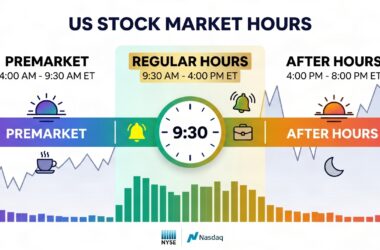
You can buy REITs through any brokerage account like E-Trade or Fidelity. They trade just like regular stocks during market hours. If you need your money, you sell shares instantly. This liquidity is huge compared to owning actual property.
Average REIT dividend yields range from 4% to 7% per year. If you invest $10,000 in a REIT paying 5%, you earn about $500 annually in dividends. Some REITs pay monthly income rather than quarterly or annual.
Different REIT types focus on different properties. Residential REITs own apartment buildings and single family homes. Commercial REITs own office buildings and shopping centers. Healthcare REITs own hospitals and nursing facilities. Industrial REITs own warehouses and distribution centers. You choose based on what interests you or diversify across types.
Public REITs trade on stock exchanges. Private REITs don’t trade publicly and require larger minimum investments. Public REITs offer better liquidity and transparency. Private REITs sometimes offer higher returns but lock your money up longer.
The main risk with REITs is stock market volatility. When markets drop, REIT values drop too. Interest rate increases hurt REIT returns. However, over long periods, REITs have historically beaten inflation and provided steady income.
Crowdfunded Real Estate: Lower Barriers to Entry
Real estate crowdfunding platforms pool money from multiple investors for property deals. Instead of needing $200,000 to buy a rental property, you might invest just $1,000. Your money combines with thousands of other small investors to fund bigger projects.
Platforms like Fundrise and ReallyMogul let everyday people invest in apartments, offices, and retail spaces. You pick projects that interest you and commit capital. The platform handles all the hard work finding deals, managing construction, and collecting rents.
Minimum investments often start between $500 and $1,000. This accessibility means regular people can participate in real estate deals once reserved for the wealthy. You build a diversified real estate portfolio with limited capital.
Typical return rates on crowdfunding range from 6% to 12% annually. Some deals offer higher returns but carry more risk. Most platforms show projected returns upfront. You know what to expect before investing.
The timeline for returns varies by project type. Fix and flip projects might return money in one to three years. Long term rental projects might distribute returns for five to ten years. Construction projects take longer but often offer higher returns.
Liquidity is the main challenge with crowdfunding. You usually cannot sell your investment early. If you need your money before the project ends, you’re stuck. This commitment requires strong emergency savings separate from real estate investments.
Due diligence matters tremendously with crowdfunding. Research the platform, the sponsors, and the specific project carefully. Read every document provided. Ask questions about the market, the property, and the sponsor’s track record. Bad sponsorship ruins even good properties.
Platform fees typically range from 1% to 2% of your investment. These fees get taken before you receive returns. Understand all fees before investing. High fees on low return projects kill your profits.
Rental Properties With Property Management
Owning rental properties becomes passive when you hire a property manager. The manager handles everything you’d normally do. They show apartments, screen tenants, collect rent, arrange repairs, and enforce leases.
Property management costs typically run 8% to 12% of monthly rent. If your property generates $2,000 monthly rent, management costs about $160 to $240 per month. This seems expensive until you realize the alternative is doing that work yourself.
After management fees, true passive income flows to you. You receive rent checks monthly minus management costs and property taxes. For many investors, this reaches genuinely passive income levels. You don’t think about the property day to day.
Finding good property managers requires effort upfront. Ask local landlords for recommendations. Interview multiple candidates. Check references thoroughly. A bad manager costs way more than the fee savings of managing yourself.
Even with property management, you still handle some responsibilities. You make final decisions on evictions, major repairs, and property improvements. You collect insurance quotes and review statements. The burden drops dramatically compared to active management, but you’re not completely hands off.
Tenant screening and eviction processes require landlord approval. Maintenance and repair coordination goes through you for items above a certain cost. The manager collects rent and handles first responses to problems. Emergency repairs might wake you up at night.
Rent collection and late payment handling gets delegated. Managers know local eviction laws and proper procedures. This legal knowledge is worth the fee alone in many cases. You avoid expensive mistakes from improper eviction attempts.
Insurance requirements for rental properties are non negotiable. Landlord insurance costs more than homeowner insurance but covers rental situations. This protects your property and liability. Without proper insurance, one lawsuit could destroy everything.
Cash flow calculations matter tremendously. Subtract mortgage payment, insurance, taxes, maintenance reserves, and management fees from rental income. What’s left is your actual passive income. Many properties don’t cash flow positively initially. They bank on appreciation.
For example, a property renting for $2,000 monthly with $1,200 mortgage, $200 insurance, $300 taxes, and $200 management costs leaves just $100 positive cash flow. That’s $1,200 annually from that property. However, appreciation might add another $5,000 to $10,000 in value annually.
Real Estate Syndication Explained
Syndication pools capital from multiple investors to fund larger projects. A syndicator (also called the general partner) finds deals and manages the project. Passive investors (limited partners) contribute money and receive returns.
Limited partners have truly passive roles. You send money, receive updates, and collect distributions. You don’t decide day to day operations. The syndicator handles everything and earns a larger share for their work.
Typical syndication deals require $25,000 to $100,000 minimum investments. This limits participation to people with substantial capital. Some deals set lower minimums for accredited investors. You must prove sufficient income or net worth to participate in many syndications.
Return distributions come quarterly or annually. Syndicators target 8% to 15% annual returns to investors. Larger returns come with higher risk. Conservative deals offer lower returns but more stability.
Finding syndication opportunities requires networking. Most deals go to existing investor lists before public marketing. Attend real estate meetups and conferences. Connect with syndicators directly. Building relationships opens doors to better deals.
Due diligence on syndicators is absolutely critical. Check their track record. How many deals have they completed? What returns did past investors actually receive? Talk to previous investors if possible. Many syndicators are excellent. Some are scams. Thorough vetting is essential.
Accreditation requirements block non wealthy individuals from many syndicates. The SEC limits syndicate offerings to accredited investors who can afford losses. You need $200,000 annual income or $1 million net worth (excluding home) to be accredited.
Exit strategies vary by project. Some syndications last five to ten years before selling. Others hold properties long term. Understanding the timeline before investing prevents surprises.
House Hacking: Active Turns Passive
House hacking means buying a multi unit property, living in one unit, and renting others. A duplex, triplex, or fourplex lets you live for free while tenants cover the mortgage.
This strategy accelerates wealth building dramatically. Instead of paying rent, your tenants pay your mortgage. You build equity while reducing housing costs. The principal and interest you pay becomes your equity instead of a landlord’s.
Multi unit properties get better financing than single family homes. Banks offer lower rates and better terms for owner occupied properties. You might qualify for larger loans with better rates than investing in pure rental properties.
Building equity happens automatically as tenants pay rent. Your $400,000 fourplex might appreciate to $450,000 in five years. Meanwhile, tenants paid down $80,000 of principal. Your total gain exceeds appreciation alone.
House hacking typically becomes passive after one to three years. Initial tenant drama and learning curve pass. Once good tenants are in place and systems run smoothly, effort drops substantially. Many house hackers transition to other properties while the first one runs on autopilot.
Rental income covers mortgage payments completely. If your mortgage is $2,000 and three units rent for $1,200 each, you’re covered. After a few years of equity building, you sell or refinance to pull out capital. This capital funds the next property.
Tax benefits of house hacking include deductions for the rental portion. Half your mortgage interest becomes deductible if you own a duplex and live in one unit. Depreciation, repairs, and insurance partially deduct. These deductions offset the rental income significantly.
Understanding Real Estate Returns and Yields
Cap rate measures annual return on your actual cash invested. A property costing $200,000 with $20,000 annual net income has a 10% cap rate. Higher cap rates mean better cash on cash returns in that moment.
Cash on cash returns show profits on money you actually put down. If you put $50,000 down on a $200,000 property generating $20,000 annually, your cash on cash return is 40%. This beats what you’d earn in savings accounts or bonds.
Appreciation gains happen silently over time. Properties typically appreciate 3% to 5% annually. On a $200,000 property, that’s $6,000 to $10,000 yearly gain. Over 20 years, appreciation could double your property value.
REIT dividend yields average 4% to 7%. They distribute quarterly or monthly. These yields exceed stock dividends and rival bond returns. For liquid investments, REIT yields are attractive.
Crowdfunding returns of 6% to 12% surpass REIT yields but include more risk. You’re funding specific projects that might underperform. Concentration risk exists when you fund few projects.
Mortgage paydown is hidden return many investors overlook. Each payment reduces loan balance. After 30 years, you own the property free and clear. That’s massive wealth creation that doesn’t show up as visible income.
Rental yield calculations divide annual rent by property purchase price. A $200,000 property renting for $2,000 monthly has a 12% rental yield. This calculation helps compare properties to other investments.
Historical real estate returns average 8% to 12% annually when combining appreciation and cash flow. This beats inflation and matches or exceeds stock market returns. Over long periods, real estate creates serious wealth.
Leverage amplifies returns. Borrowing $150,000 at 5% to buy a $200,000 property means your $50,000 down payment generates returns on the full $200,000 value. When property appreciates 5%, that’s $10,000 gain on $50,000 invested. That’s a 20% return on your actual money.
Tax Benefits You Actually Get
Depreciation deductions are the biggest tax benefit. Buildings lose value over time according to the IRS, even though real buildings usually appreciate. You deduct this fictional depreciation against rental income.
On a $200,000 property with $40,000 land value, the $160,000 building depreciates over 27.5 years. That’s about $5,800 annual depreciation deductions. This reduces taxable rental income even if you’re cash flow positive.
Mortgage interest deductions cut your tax bill dramatically. On a $150,000 mortgage at 5%, you pay about $7,500 interest in year one. All of that is deductible against rental income.
Property tax deductions apply to the real estate taxes you pay locally. Most people pay $2,000 to $5,000 annually in property taxes. These reduce taxable income from the property.
Maintenance and repair write offs include painting, fixing roofs, replacing HVAC systems, and landscaping. Improvements that extend property life get capitalized. Repairs that return property to normal condition get deducted.
Insurance premium deductions cover landlord insurance and liability coverage. Management company fees get deducted as operating expenses.
1031 exchanges let you defer capital gains taxes by reinvesting proceeds into another property. You sell one property and buy a similar value property within 180 days. Taxes get deferred indefinitely if you keep exchanging.
Passive activity loss limitations restrict deductions from real estate losses. Losses can only offset passive income from other sources. This rule prevents using real estate losses to reduce W-2 wages from your job.
IRS Rental Property Deductions (www.irs.gov/taxtopics/tc527) provides official guidance on deductible expenses
REIT dividend tax treatment varies. Qualified dividends get favorable rates. Non qualified dividends get taxed as ordinary income. Check your REIT’s annual statements.
Long term capital gains from property sales get better tax treatment than short term gains. Holding property over one year qualifies. Rates are currently 0%, 15%, or 20% depending on income.
State tax variations affect returns significantly. Some states tax real estate differently. California’s Prop 13 limits property tax increases. Some states eliminate property taxes completely. Understanding your state’s rules matters.
Hiring a tax professional becomes worthwhile once you own multiple properties. The tax complexity and deduction opportunities justify professional help. Many investors save thousands annually through proper tax planning.
Common Mistakes Passive Investors Make
Underestimating property management costs surprises many investors. A 12% fee on monthly rent adds up fast. Paired with vacancy, maintenance, and insurance, cash flow disappears quickly.
Not vetting syndicators properly leads to losses. Investing with inexperienced or dishonest operators wastes capital. Spending time checking track records prevents disaster.
Putting too much in a single REIT concentrates risk. If that REIT’s sector falls apart, your returns suffer. Diversifying across five to ten REITs spreads risk.
Ignoring due diligence on crowdfunding invites trouble. Reading sponsor bios, project details, and financials takes time. That time prevents losses from bad deals.
Not understanding fee structures blinds you to actual returns. High fees on modest return projects destroy profits. Calculate net returns after all fees before committing capital.
Expecting immediate income sets wrong expectations. Most investments take months or years to return capital. Real estate is long term wealth building, not quick cash.
Neglecting to diversify passive investments creates concentration risk. One strategy failing shouldn’t destroy your whole plan. Mix REITs, crowdfunding, and rentals with property management.
Buying in bad real estate markets wastes capital. Some cities have terrible job growth and population decline. Growing markets with immigration and business expansion offer better appreciation. Choose markets carefully.
Failing to maintain emergency reserves creates problems. When unexpected expenses hit, you need cash. Emergency funds prevent forced sales at bad times.
Over leveraging with debt multiplies risks. Borrowing 90% of property value means small market declines wipe out equity. Conservative leverage of 60% to 70% provides safety margins.
Ignoring property condition reports before buying creates surprises. Structural issues, roof damage, and foundation problems are expensive. Professional inspections reveal problems before purchase.
Not reading investment documents thoroughly causes regrets. Prospectuses and offering documents explain risks, fees, and timelines. Skimming these creates situations you didn’t expect.
Building Your Passive Real Estate Portfolio
Start with REITs as a low barrier entry point. Open a brokerage account and buy shares. You need only $100 to $1,000 to start. This teaches you real estate investing basics with minimal risk.
A typical timeline for portfolio growth spans five to twenty years. Year one might bring REITs and small crowdfunding investments. By year five, you might add a property with management. By year ten, multiple properties and diverse investments generate substantial passive income.
Diversification across strategies protects against single strategy failure. If crowdfunding deals underperform, REITs and rentals continue producing. Spreading capital prevents any one loss from destroying your plan.
Geographic diversification matters tremendously. Real estate markets vary widely by location. Sun Belt cities might boom while Rust Belt cities decline. Own properties in growing markets with diverse economies.
Property type diversification spreads risk. Residential real estate behaves differently than commercial. Healthcare properties have different dynamics than retail. Owning multiple property types provides stability.
Market cycle timing is nearly impossible to predict. Trying to buy only at market bottoms usually means missing good opportunities. Dollar cost averaging by investing consistently regardless of market conditions works better.
Reinvesting dividends and distributions accelerates wealth building. Instead of withdrawing income, reinvest it. Compound growth multiplies money over decades.
Tracking investments in a spreadsheet or software matters. You need to see your overall portfolio performance. Review quarterly progress toward goals. Adjust allocations as needed.
Annual review and rebalancing keeps your plan on track. Rebalance when allocations drift from targets. Sell performers exceeding targets and buy underweighted strategies.
Realistic income goals guide your strategy. If you need $3,000 monthly passive income, calculate how much capital that requires. Different methods generate different returns. Plan accordingly.
REITs vs Direct Property Ownership
REIT liquidity allows selling shares instantly during market hours. Direct property ownership takes months to sell. This flexibility matters if you need quick access to capital.
Management requirements differ dramatically. REITs handle everything. Direct ownership requires hiring property managers or managing yourself. Direct ownership requires more involvement.
Capital requirements for REITs range from $100 to $5,000 initially. Direct property ownership typically requires $40,000 to $100,000 down payment minimum. REITs are more accessible.
Tax treatment differs between REITs and direct property. REIT dividends get taxed as ordinary income. Direct property depreciation provides tax deductions. Direct property ownership offers better tax benefits.
Control and decision making go to you with direct property. You choose tenants, repairs, and strategies. With REITs, the company decides everything. Some investors prefer control. Others prefer hands off.
Appreciation potential is similar for both. Real estate appreciates regardless of ownership method. Both methods capture these gains.
Leverage possibilities are limited with REITs. You own shares, not property. Direct ownership allows borrowing against property value. Leverage amplifies returns but increases risk.
The best scenario for REITs is limited capital, limited time, and preference for simplicity. For direct property, you need capital, time, and desire for control and tax benefits.
Many successful investors use both. REITs provide steady income and liquidity. Rental properties provide tax benefits and leverage. Together they create balanced portfolios.
How Much Passive Income Can You Really Make
Starting with $10,000 in a REIT at 5% return generates about $500 annually. That’s not life changing money. But it’s $500 without any work.
Adding $5,000 to crowdfunding at 8% return creates another $400 annually. Combined, you earn $900 yearly on $15,000 invested. That’s 6% average return.
A $50,000 investment in syndication returning 10% generates $5,000 annually. This level starts feeling more substantial. Monthly income of about $417 could help with expenses.
Owning a property with $1,200 monthly rent after expenses nets $300 to $600 passively with management. Two properties generate $600 to $1,200 monthly. Four properties reach $2,400 to $4,800 monthly.
Scaling passive income requires reinvesting profits. Take $5,000 annual returns and invest them in new opportunities. That capital generates additional returns next year. Compound growth accelerates wealth building.
Reaching full time income levels typically takes five to ten years for people starting with limited capital. People with more capital compress timelines. People reinvesting consistently accelerate growth. The math works for patient investors.
Market variations matter. Cities with strong appreciation and rental demand generate better returns. Weak markets provide lower returns. Geographic choice impacts results significantly.
Conservative estimates suggest $100,000 invested in diversified passive real estate returns about $6,000 to $8,000 annually. $500,000 generates $30,000 to $40,000 yearly. $1,000,000 generates $60,000 to $80,000 annually.
These aren’t quick riches. They’re real wealth building through patience and consistency. The power emerges after years of compounding.
Getting Started This Week
Open a brokerage account today. Fidelity, Vanguard, and Charles Schwab all work. The process takes 15 minutes online.
Research one crowdfunding platform this week. Read reviews and compare minimums. Sign up for their email list to learn more.
Find a local real estate investment club. Most cities have regular meetups. Connect with experienced investors. Ask questions.
Buy your first REIT share before Friday. Start with $500 or $1,000. Experience firsthand how dividends work. Track quarterly distributions.
Read one property prospectus thoroughly. Check the SEC website for syndication offerings. Understand the deal before considering investment.
Calculate potential returns for your situation. How much can you invest initially? How much monthly? What timeline makes sense? Model your results.
Make your first real estate investment within 30 days. Don’t hesitate forever. Start small and build. Perfect information will never come. Take action with what you know now.
Conclusion
Passive real estate investing creates genuine wealth without consuming your time. REITs offer the easiest entry point for beginners. Crowdfunding provides a middle ground between REITs and direct ownership. Rental properties with management companies generate substantial passive income.
Each strategy has merit for different situations. Building a complete portfolio usually involves multiple methods. Start simple with REITs. Add complexity only as you learn.
Real estate creates lasting wealth better than most investments. Property prices increase with inflation. Leverage amplifies your returns. Tax benefits reduce what you owe.
Starting now builds momentum that compounds for decades. A $500 investment at age 25 might grow to $50,000 by age 55 through compounding. Starting at 55 means limited compounding time.
Your first step is simple. Open a brokerage account this week. Buy one REIT share. Take action today.