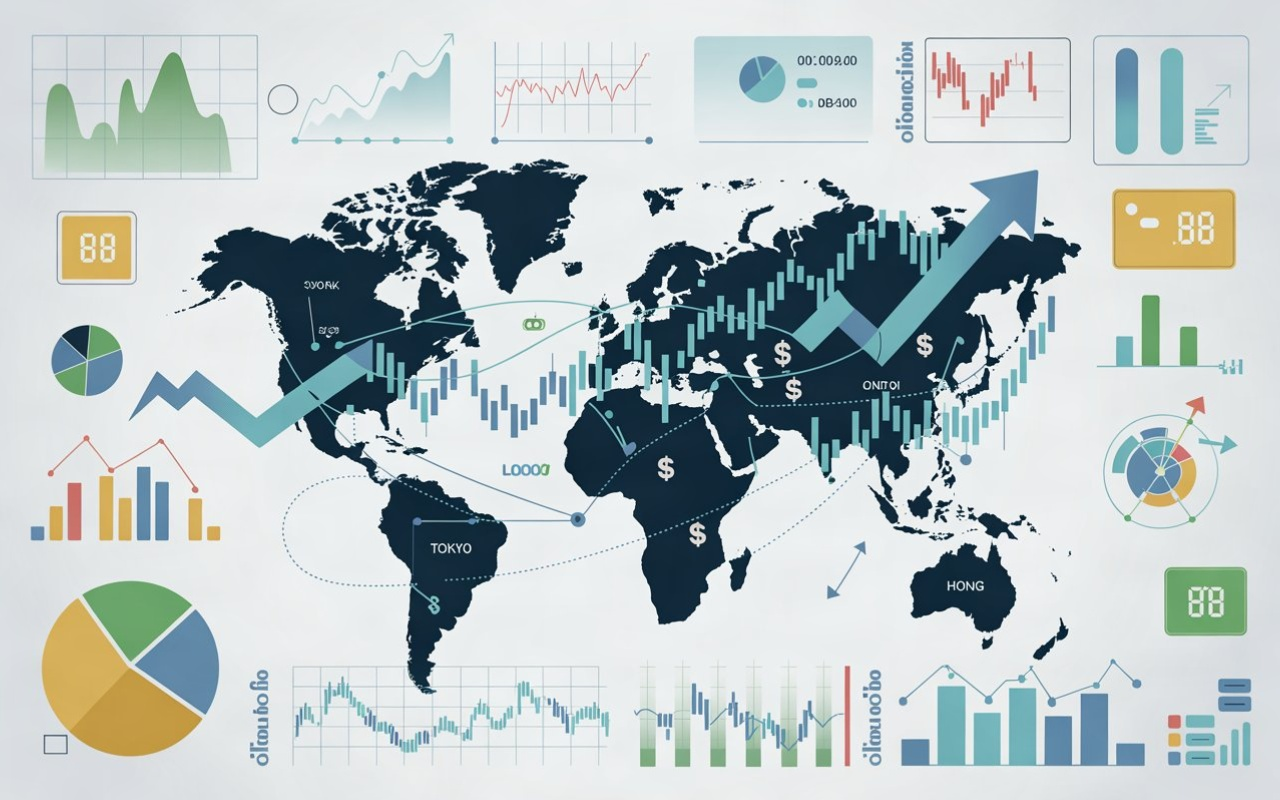
In 2008, the global financial crisis wiped out $2 trillion in retirement savings in just 15 months, proving that what happens across the ocean can empty your wallet at home. Your money doesn’t live in a bubble. When markets crash in Asia, your 401k feels it by morning. When Europe raises interest rates, your stock portfolio shifts before lunch.
Most people think investing is just about picking good companies or funds. That’s only half the story. The other half is paying attention to what’s happening around the world and how those big movements will shake your investments. This article will show you exactly how global market trends shape your investment choices and what you can do about it.
You’ll learn to spot the warning signs before trouble hits. You’ll understand why your portfolio moves the way it does. Most importantly, you’ll make smarter decisions with your money because you’ll see the bigger picture. Let’s get started.
What Are Global Market Trends and Why Should You Care
Global market trends are the big patterns and movements that happen across countries and continents. Think of them as giant waves in the ocean of money that flows around the world every single day. These trends include things like rising prices, changing interest rates, shifts in what people buy, and how countries trade with each other.
Here’s why this matters to you. When China’s economy slows down, American companies that sell products there make less money. Their stock prices drop, and if you own those stocks, you lose money. When oil prices jump in the Middle East, you pay more at the pump, but energy company stocks might rise.
The world economy is connected like never before. A factory closing in Germany can affect jobs in Mexico. A new technology in South Korea can make your tech stocks more valuable. Ignoring these connections is like driving with your eyes half closed.
The good news is that understanding these trends gives you an edge. You can shift your money before problems hit. You can grab opportunities that others miss. You can sleep better knowing your investments make sense in the current world climate.
The Big Players That Move Markets Around the World
Some countries and organizations have so much economic power that their decisions ripple everywhere. The United States economy is the largest in the world, so what happens on Wall Street affects markets from Tokyo to London. When the US economy grows, it pulls other countries up with it. When it stumbles, everyone feels the pain.
China became the second largest economy and the world’s factory. Millions of companies depend on Chinese manufacturing and billions of consumers there buy products from around the globe. When China changes its policies or its economy slows down, global markets react within hours.
Europe matters because it’s a huge trading block with wealthy consumers. The European Central Bank makes decisions that affect the euro, which is one of the world’s most important currencies. Japan, despite its smaller size now, still runs a massive economy with global companies that employ millions worldwide.
Central banks are the puppet masters behind many market movements. The Federal Reserve in the US, the European Central Bank, the Bank of Japan, and the People’s Bank of China control money supply and interest rates. When they meet and make decisions, trillions of dollars move around the world. Their policy changes can make your stocks soar or sink your bond values.
Economic Indicators That Signal Change
Smart investors watch certain numbers that tell them where the economy is headed. GDP growth rate shows if a country’s economy is expanding or shrinking. When GDP grows fast, companies usually make more money and stocks tend to rise. When GDP falls, trouble often follows.
Employment numbers reveal economic health better than almost anything else. When people have jobs, they spend money, companies profit, and markets usually climb. Rising unemployment signals trouble ahead. These numbers come out monthly and investors watch them closely.
Manufacturing data shows if factories are busy or idle. The purchasing managers index tells you if factory orders are growing or shrinking. Strong manufacturing usually means economic growth. Weak numbers suggest a slowdown coming.
Consumer spending drives most modern economies. When people feel confident and spend money, businesses thrive. When they get scared and save instead, economic growth stalls. Retail sales numbers and consumer confidence surveys predict where markets might go next.
Key Economic Indicators to Watch:
- GDP Growth Rate: Overall economic health
- Unemployment Rate: Job market strength
- Manufacturing PMI: Factory activity levels
- Consumer Price Index: Inflation measurement
- Retail Sales: Consumer spending patterns
- Consumer Confidence: Future spending likelihood
You don’t need an economics degree to follow these indicators. Many websites publish them for free. Just knowing when they’re released and which direction they’re moving helps you make better investment decisions.
How Currency Movements Impact Your Money
Currency exchange rates determine how much one country’s money is worth compared to another. When the US dollar gets stronger, it buys more euros, yen, or pesos. When it weakens, it buys less. These shifts happen every single day and they affect your investments in ways you might not expect.
A strong dollar helps American tourists abroad but hurts US companies selling products overseas. If Apple sells an iPhone in Europe for 1000 euros, that converts to fewer dollars when the dollar is strong. Company profits fall and stock prices often follow.
A weak dollar does the opposite. American exports become cheaper for foreigners to buy, so US companies sell more abroad. Their profits rise and stocks can climb. But imported goods cost more, which can spark inflation at home.
If you own international stocks or funds, currency movements add another layer of risk and opportunity. You might pick a great Japanese company whose stock rises 10% in yen. But if the yen falls 12% against the dollar during that time, you actually lose money when converted back to dollars.
Many investors forget about currency risk completely. They see a hot emerging market and jump in without considering that the local currency might collapse. Others find opportunities when a currency gets too weak and rebounds. The key is knowing this risk exists and factoring it into your choices.
Trade Wars and Tariffs: What They Mean for Investors
When countries slap taxes on imports from other nations, we call those tariffs. Trade wars happen when countries go back and forth raising tariffs on each other’s goods. These disputes shake markets because they disrupt business and create uncertainty about future profits.
The US China trade tensions from 2018 to 2020 showed how fast tariffs can hurt. American companies that relied on Chinese parts saw costs jump overnight. Chinese companies lost access to US customers. Stock markets on both sides dropped billions in value on days when new tariffs were announced.
The World Trade Organization tracks these disputes and publishes data on global trade flows that investors can monitor.
Some industries get crushed by trade disputes while others benefit. Steel and aluminum companies loved tariffs on imported metals because they could charge more. But car companies and construction firms hated those same tariffs because their costs increased. Farmers got hammered when China stopped buying American soybeans in retaliation.
Smart investors watch trade negotiations and policy announcements. When tensions ease, affected stocks often jump. When new tariffs get announced, those same stocks can tank. You can position your portfolio to avoid the worst damage or even profit from these swings.
The key is not panicking when trade wars make headlines. Most disputes eventually get resolved. But staying informed helps you avoid sectors that will get hit hardest and find opportunities in industries that might benefit from the chaos.
Interest Rates: The Hidden Force Behind Market Moves
Interest rates control the cost of borrowing money. When central banks raise rates, loans become more expensive for everyone from homebuyers to giant corporations. When they lower rates, borrowing gets cheaper and economic activity usually increases.
These rate changes ripple through every investment you own. Bonds react immediately because they compete with new bonds at different rates. If you own a bond paying 3% and new bonds start paying 5%, your bond loses value. Nobody wants to pay full price for your lower rate when they can get better elsewhere.
Stocks feel the impact too, just more indirectly. Higher interest rates mean companies pay more to borrow money for expansion. Their profits shrink and stock prices often fall. Lower rates do the opposite, making it cheaper for companies to grow and potentially boosting stock values.
Real estate investments swing with interest rate changes. Higher mortgage rates mean fewer people can afford homes, which can push prices down. Lower rates make housing more affordable and often drive prices up. Real estate investment trusts and homebuilder stocks move dramatically when rate policies change.
Global interest rate differences create huge money flows. If US rates rise while European rates stay low, investors move money to America seeking better returns. This strengthens the dollar and affects currency markets. These cross border flows can be worth trillions of dollars.
Pay attention to central bank meetings and rate announcements. The Federal Reserve, European Central Bank, and other major central banks telegraph their intentions months in advance. Listening to what they say helps you prepare your portfolio for what’s coming.
Inflation and Your Investment Returns
Inflation means the general rise in prices over time. Your dollar buys less today than it did last year. This silent thief eats away at your purchasing power and your investment returns if you’re not careful.
Global inflation spreads like a virus. When oil prices jump worldwide, transportation costs rise everywhere. Companies pay more to ship goods, then pass those costs to consumers. Workers demand higher wages to keep up, and the cycle continues. What starts in one country quickly affects others through trade and commodity markets.
Different countries experience different inflation rates at the same time. Turkey might suffer 80% inflation while Switzerland sees just 2%. These gaps create investment opportunities and risks. Currencies of high inflation countries usually weaken, hurting returns for foreign investors. Low inflation countries often see their currencies strengthen.
Stocks can protect against moderate inflation because companies raise prices along with their costs. But very high inflation crushes stock values because it creates chaos and uncertainty. Bonds get destroyed by inflation since your fixed interest payments buy less and less over time.
Real assets like real estate, commodities, and inflation protected securities do better when prices rise. Gold often climbs during inflation scares. Energy and materials stocks can thrive. Knowing which investments survive inflation helps you build a portfolio that works in different environments.
Right now, inflation rates are elevated across much of the world after years of being low. This shift caught many investors off guard and hurt portfolios heavy in long term bonds. Staying aware of inflation trends helps you adjust before your purchasing power evaporates.
Geopolitical Events That Shake Markets
Elections, wars, political crises, and policy changes create uncertainty that markets hate. Investors prefer stability and predictability. When geopolitical events threaten that stability, money moves fast and markets swing wildly.
Wars and military conflicts immediately impact markets. The Russian invasion of Ukraine in 2022 sent energy and grain prices soaring because both countries are major suppliers. Stock markets initially plunged on uncertainty. Defense stocks jumped while airline stocks crashed. Investors had to react quickly to protect their money.
Elections in major economies create volatility as investors try to guess which policies will win. A business friendly candidate might boost stocks. Someone promising higher corporate taxes might send them down. Brexit showed how a single vote can cause years of market uncertainty and currency swings.
Political instability in emerging markets carries huge risks. A coup or revolution can wipe out investments overnight if assets get seized or markets shut down. Even stable countries face risk when radical policy changes come without warning.
The key is not trying to predict every possible crisis. Instead, build a diversified portfolio that can weather shocks. Don’t put all your money in one country or region. Keep some safe assets that hold value during chaos. Stay informed but don’t panic sell every time headlines scream danger.
History shows that markets recover from most geopolitical shocks faster than people expect. The initial panic often creates buying opportunities for investors who keep their heads while others lose theirs.
Technology and Global Information Flow
Markets move faster now than ever before because information spreads instantly. A company announces earnings in Tokyo and traders in New York react in milliseconds. This speed creates opportunities but also amplifies panic.
Social media has become a force in market movements. A tweet from an influential person can move billions in stock value. Reddit communities have driven short squeezes that destroyed hedge funds. Information and misinformation spread so fast that separating truth from rumor gets harder every day.
Algorithmic trading now dominates major markets. Computers make millions of trades per second based on mathematical formulas. These algorithms can amplify trends and create flash crashes where markets plunge and recover in minutes. Individual investors need to understand they’re competing against machines with advantages in speed and data processing.
The faster information flow means you can’t ignore global trends anymore. Something happening right now in Singapore might affect your portfolio before you finish breakfast. You need reliable information sources and the discipline to filter out noise from real signals.
This doesn’t mean you should obsess over every tick and tweet. But setting up alerts for major market moving news and checking trusted sources daily helps you stay informed without drowning in information overload. The goal is awareness without paralysis.
Emerging Markets vs Developed Markets
Emerging markets are countries with growing economies that aren’t yet fully developed. Places like India, Brazil, Vietnam, and parts of Africa offer high growth potential but come with bigger risks. Developed markets like the US, Western Europe, and Japan are stable but grow more slowly.
Global trends hit these market types differently. When the world economy booms, emerging markets often soar because investors chase higher growth. Their stock markets can rise 30% or 40% in a good year. But when trouble comes, emerging markets crash harder. A recession that drops developed markets 15% might tank emerging markets 40% or more.
Currency risk is much bigger in emerging markets. Political instability threatens investments. Accounting standards may be looser and fraud more common. You might pick a winning company only to see its government seize assets or change rules that destroy shareholder value.
Yet the growth potential in emerging markets is real. Millions of people entering the middle class create massive consumer markets. Infrastructure needs offer opportunities. Getting in early on developing economies has made many investors wealthy.
The smart approach is balance. Most financial advisors suggest keeping the bulk of your money in developed markets for stability. Add a smaller portion to emerging markets for growth potential. This mix lets you participate in global growth without betting everything on riskier markets.
Watch how global interest rates affect emerging markets particularly. When US rates rise, money often flows out of emerging markets back to America. When US rates fall, emerging markets often benefit from increased investment flows.
Commodity Prices and Market Sentiment
Commodities are raw materials like oil, gold, copper, wheat, and lumber. Their prices signal what’s happening in the global economy and affect markets in surprising ways.
Oil prices impact everything from transportation costs to plastics manufacturing. When oil jumps, airlines and shipping companies hurt while energy producers profit. High oil prices can slow economic growth by raising costs across the board. Low prices stimulate growth but hammer energy sector stocks and bonds.
Gold traditionally serves as a safe haven during uncertainty. When geopolitical tensions rise or inflation fears grow, investors buy gold. Stock markets often fall at the same time gold climbs. Watching gold prices tells you something about investor fear levels.
Copper and other industrial metals signal manufacturing strength. Strong copper demand suggests factories are busy building things, which means economic growth. Falling copper prices often predict slowdowns before they show up in official data.
Agricultural commodity prices matter for food costs and emerging market stability. Wheat and corn price spikes can cause political unrest in countries where people spend most of their income on food. These disruptions then affect broader markets.
You don’t need to invest directly in commodities to care about their prices. They serve as early warning indicators for trends that will eventually hit stocks and bonds. Many investors track commodity prices as part of their overall market analysis.
How Smart Investors Use Global Trends
Successful investors don’t panic over global trends but they don’t ignore them either. They develop a systematic approach to monitoring what matters and adjusting their portfolios when big shifts happen.
The first step is information gathering. Set up a routine to check major economic indicators, central bank announcements, and significant geopolitical developments. This doesn’t mean watching financial news all day. Fifteen minutes each morning reading quality sources keeps you informed without overwhelming you.
Learn to separate noise from signals. Markets overreact to headlines constantly. A scary story might tank stocks 2% only to see them recover the next day. Real trends develop over weeks and months, not hours. Look for patterns and confirmations rather than reacting to every bit of news.
Adjust your portfolio allocation based on what you see. If multiple indicators suggest a recession coming, you might shift some money from stocks to bonds or cash. If emerging markets look ready to boom, you might increase exposure there. These moves should be gradual and measured, not all or nothing bets.
Timing is tricky and most people get it wrong. Instead of trying to perfectly time market tops and bottoms, think in terms of shifting gradually. Move 5% or 10% of your portfolio rather than swinging wildly. This approach reduces the damage when you’re wrong and still captures benefits when you’re right.
Practical Steps When You Spot a Major Trend:
- Verify the trend from multiple reliable sources
- Assess how it specifically affects your investments
- Consider both risks and opportunities it creates
- Make gradual adjustments rather than dramatic changes
- Document your reasoning to learn from results
- Review the outcome months later to improve your process
- Stay flexible as new information emerges
Building a Globally Aware Investment Strategy
A truly smart investment strategy acknowledges that global market trends affect everything you own. Start by diversifying across different countries and regions. Don’t put all your money in US stocks even if you live in America.
International diversification means owning developed market funds that invest in Europe, Japan, and other stable economies. Add some emerging market exposure for growth potential. Real estate investment trusts from different countries provide another layer. This geographic spread reduces the risk that one region’s problems destroy your wealth.
Balance your domestic and international exposure based on your comfort with risk. A conservative approach might be 70% domestic and 30% international. More aggressive investors might flip that ratio. The key is having exposure to multiple regions so you benefit when different areas thrive.
Risk management goes beyond just diversification. Keep an emergency fund in cash so you never have to sell investments at the wrong time. Consider your timeline and don’t put money you’ll need soon into volatile assets. Use stop losses or other tools to limit downside if that fits your strategy.
Set up alerts for major market moving events. Google Alerts can notify you about specific topics. Many financial websites offer customizable news feeds. Your brokerage probably sends alerts about holdings. Find a system that keeps you informed without creating constant distraction.
Review your portfolio quarterly at minimum. Check if your asset allocation still makes sense given current global trends. Rebalance back to your target percentages when things drift too far. Annual deep reviews help you assess if your overall strategy needs adjustment.
Working with a financial advisor makes sense for many people. A good advisor watches global trends professionally and helps you make smart decisions without emotional reactions. If you prefer going solo, commit to ongoing education about markets and economics.
Common Mistakes Investors Make With Global Trends
The biggest mistake is overreacting to short term news. Markets drop 3% on some scary headline and panicked investors sell everything. Two weeks later markets are back up and those sellers locked in losses for no reason. Remember that volatility is normal and temporary drops don’t require action.
Ignoring global trends completely is the opposite mistake but equally damaging. Some investors stick their heads in the sand and never adjust to changing conditions. They ride their portfolio down in preventable disasters because they weren’t paying attention to obvious warning signs.
Following the crowd too late destroys returns. By the time everyone agrees that emerging markets are hot, they’ve already run up and may be ready to crash. The best opportunities come from spotting trends early, not piling in after they make headlines. Contrarian thinking often pays better than consensus views.
Poor timing wrecks many portfolios. Investors sell at market bottoms out of fear and buy at tops out of greed. They make huge allocation shifts based on last month’s performance rather than future prospects. Gradual adjustments based on changing fundamentals work better than dramatic timing bets.
Confirmation bias makes people seek information that supports what they already believe. If you think markets will crash, you’ll find plenty of doom and gloom to confirm that view. Force yourself to read opposing viewpoints and challenge your assumptions regularly.
Lack of discipline in reviewing and adjusting is another common failure. People set up portfolios and then forget about them for years. Markets change, your life situation changes, and your investments should change too. Regular reviews keep your strategy aligned with reality.
Real World Examples: Trends That Changed Portfolios
The 2008 financial crisis started with US housing problems but became a global catastrophe. Banks around the world held toxic mortgage securities. Credit markets froze everywhere. Stock markets worldwide crashed 50% or more. Investors who were diversified across countries got hammered just as badly as those in one market because the crisis spread globally.
The lesson was that some risks are systemic and affect everything. But investors who stayed calm and held on recovered within a few years. Those who sold at the bottom and stayed in cash missed the entire recovery. Having cash to buy when assets were cheap made some people wealthy.
The COVID 19 pandemic created market chaos in early 2020. Global stocks plunged 30% in weeks as economies shut down. Then central banks flooded the world with money and stimulus. Markets roared back to new highs by summer. Technology stocks soared as work from home became normal. Travel and hospitality stocks crashed and took years to recover.
Investors who recognized the shift to digital economy thrived. Those who panic sold in March 2020 missed the fastest recovery ever. The pandemic showed how quickly global events can reshape markets and which sectors win or lose.
Brexit in 2016 demonstrated how political decisions create years of market uncertainty. The British pound dropped sharply and stayed weak for years. UK stocks struggled while European stocks did better. Investors had to navigate years of trade negotiation uncertainty. Those who avoided UK assets during the chaos protected their returns.
Recent inflation surges hurt bond investors globally. For years bonds provided steady if unexciting returns. Then inflation jumped in 2021 and 2022 across most developed countries. Bond values crashed as interest rates rose to fight inflation. A supposedly safe investment category lost 10% to 20% depending on duration.
The winners were investors who shifted to inflation protected securities, commodities, and real assets before the trend fully developed. Those stuck in traditional bond funds suffered the worst bond market in generations.
Creating Your Personal Action Plan
Start by honestly assessing your current portfolio. List every investment you own and identify which countries and regions you’re exposed to. Many people think they’re diversified but actually have everything in US stocks. Others have random international exposure without understanding what they own.
Identify which global trends affect you most. If you’re heavy in technology stocks, watch for regulation changes in major markets. If you own lots of bonds, interest rate policies matter hugely. If emerging markets make up a big chunk, pay attention to currency movements and political stability.
Set up a monitoring system that works for your life. Maybe that’s checking three trusted financial websites each morning. Perhaps subscribing to a weekly market summary newsletter. Following economists and analysts on social media. Find reliable information sources and create a routine you’ll actually stick to.
Develop a decision making framework before you need it. Decide in advance what would make you shift allocations. Maybe if recession indicators all flash red for three straight months, you move 10% from stocks to bonds. Having rules prevents emotional decisions in the heat of market panic or euphoria.
Schedule regular reviews of your portfolio and strategy. Put quarterly reviews on your calendar. During these reviews, check your allocation percentages, assess how global trends might be shifting, and make small adjustments as needed. Annual deeper reviews should question whether your overall approach still fits your goals.
Stay flexible and keep learning. Markets evolve and new trends emerge constantly. What worked last decade might fail next decade. Read books about investing and economics. Learn from your mistakes and successes. Adjust your approach as you gain experience and knowledge.
Conclusion
Global market trends shape your investment results whether you pay attention or not. The world economy connects every market and every investment in ways that seemed impossible just decades ago. What happens in Beijing affects your retirement account. European interest rates move your bond values. Middle East conflicts shift your energy stocks.
Awareness beats ignorance every time. You don’t need to predict the future perfectly or catch every trend at the ideal moment. You just need to stay informed about major movements and adjust your portfolio gradually as conditions change. This approach protects you from preventable disasters and positions you to capture opportunities others miss.
The investors who thrive long term are those who balance two competing needs. They stay aware of global trends without becoming paralyzed by information overload. They make adjustments without constantly trading on every headline. They prepare for risks while maintaining optimism about opportunities.
Your financial future depends on decisions you make today. Building a globally aware investment strategy takes some work upfront but pays off for decades. Start paying attention to the trends discussed in this article. Notice how they move your investments. Learn from what you see and gradually improve your approach.
The world will keep changing and markets will keep moving. Economic cycles will boom and bust. Geopolitical events will create chaos and opportunity. Your job isn’t to predict it all perfectly but to stay informed, maintain discipline, and keep your investments aligned with global reality.
Take Action Now
This week, review your current portfolio and identify exactly which countries and regions you’re invested in. Write down the percentage in US stocks, international developed markets, emerging markets, bonds, and other assets. This simple exercise reveals whether you’re truly diversified or more concentrated than you thought.
Set up at least two reliable sources of global market information that you’ll check regularly. Subscribe to a quality financial newsletter or follow respected economists who explain trends in plain language. Building this habit takes just minutes daily but dramatically improves your investment awareness over time.
Share this article with someone who needs to understand how global markets affect their money. Better yet, discuss these concepts with your family or friends who invest. Teaching others reinforces your own learning and might spark insights you hadn’t considered.
Your money deserves attention and thoughtful management. The global trends shaping markets aren’t mysterious forces beyond your understanding. They’re knowable patterns that you can learn to recognize and respond to intelligently. Start today and your future self will thank you.