
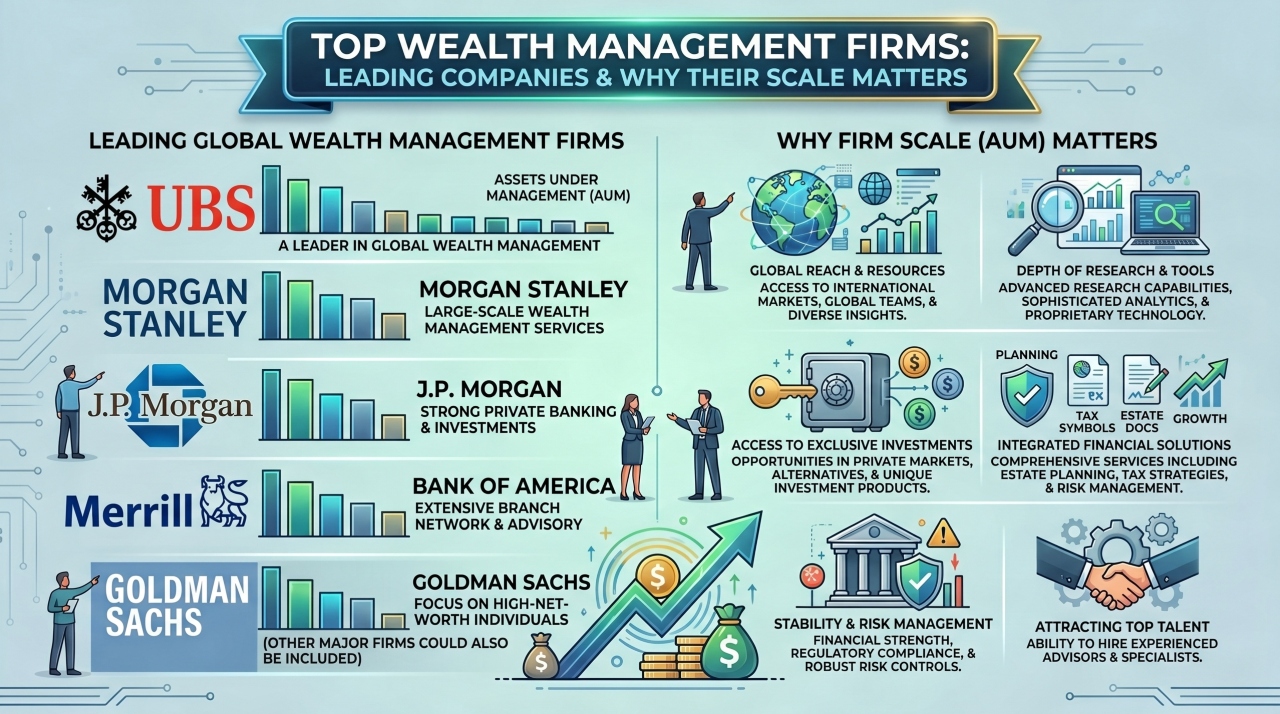
The world’s top wealth management firms oversee more than $140 trillion in assets. That’s more money than the entire GDP of every country except the United States and China combined. Understanding which firms manage this money and how they operate matters if you have significant wealth to protect. This article walks you through the biggest wealth management firms, what they offer, and how to choose one that works for your situation.
Wealth management isn’t the same as having a stockbroker or investment advisor. It’s a comprehensive approach to handling all your financial needs. A good wealth management firm helps you invest money, plan for taxes, organize your estate, and prepare for retirement. They coordinate all these pieces so everything works together. You’ll learn which companies do this best and why their services matter.
What Is Wealth Management and Why Do Rich People Need It?
Wealth management means having professionals manage your money in a coordinated way. When you have significant assets, one advisor isn’t enough. You need tax specialists, estate planners, investment professionals, and insurance experts all working together. Wealth management firms provide all these services in one place.
The basic services include investment management where advisors build and manage your portfolio. Tax planning helps you keep more money by reducing what you owe the government legally. Estate planning ensures your money goes where you want after you die. Retirement planning creates a strategy for living well without working forever.
Regular financial advice differs from wealth management because it focuses mainly on investing. Your average broker might help you pick stocks or mutual funds, but they don’t coordinate with your tax situation or estate plan. Wealth management takes a bigger picture approach. Everything connects to your overall financial goals.
Without professional help, wealthy people make expensive mistakes. They might invest inefficiently, pay too much in taxes, or create legal problems with their estate. They might not diversify properly or understand their own risk tolerance. Professional wealth managers prevent these problems by bringing expertise and oversight.
The Biggest Wealth Management Firms in the World
Several giant firms dominate the wealth management industry globally. These companies manage trillions of dollars and serve millions of clients. Understanding what each firm does helps you evaluate whether they match your needs. Size matters, but bigger doesn’t automatically mean better for your specific situation.
BlackRock manages over $10 trillion and focuses heavily on technology and passive investing through index funds. Vanguard owns itself through its clients, creating a unique structure where your interests align with theirs. Fidelity operates as a private company and offers everything from brokerage to wealth management. JPMorgan Chase combines banking services with wealth management, making it powerful for complex situations. Morgan Stanley built its reputation on investment banking but expanded into personal wealth management. UBS operates as a Swiss bank with global reach, particularly strong in Europe and with ultra wealthy clients.
These firms differ significantly in their philosophy and approach. Some emphasize low costs and passive investing. Others focus on personalized service and active management. Some serve ultra wealthy individuals with complex needs while others cater to regular high net worth clients. Your choice depends on what matters most to you.
BlackRock: The Largest Wealth Manager on the Planet
BlackRock was founded in 1988 and has grown into a global giant managing over $10 trillion in assets. The company operates from New York and provides investment products and services worldwide. Most people know BlackRock through iShares, their extremely popular exchange traded fund platform. Many investors own BlackRock products without realizing it.
BlackRock uses technology extensively throughout their business, from research to portfolio management. This tech focus appeals to investors comfortable with data driven approaches. The company’s BlackRock’s investment research capabilities rank among the best in the industry.
The company’s Aladdin software system represents a major competitive advantage. This technology analyzes enormous amounts of financial data to help with investment decisions. BlackRock uses technology extensively throughout their business, from research to portfolio management. This tech focus appeals to investors comfortable with data driven approaches.
BlackRock’s strengths include superior technology, enormous research capacity, and access to diverse investment options. The firm excels at passive index investing through ETFs and index funds. Their weakness is that size sometimes means less personalized service. With so many clients, your individual situation might receive less attention than at smaller firms.
The company works best for investors who want passive index funds or broad diversification. Fee structures typically range from 0.15 percent to 0.50 percent annually depending on service level. Many clients never interact with a BlackRock employee directly, managing everything through their website and apps. For sophisticated investors comfortable with technology, BlackRock provides excellent and affordable options.
Vanguard: The Client Owned Alternative
Vanguard operates under a completely different structure than other major firms. Founded in 1975 by legendary investor John Bogle, the company is owned by its clients through its funds rather than by outside shareholders. This ownership structure creates powerful alignment of interests. Vanguard profits when clients profit, and clients keep more money because there are no outside shareholders demanding profits.
Vanguard manages over $8 trillion and maintains a strong reputation for putting clients first. The company charges some of the lowest fees in the industry because they don’t need to generate excess profits for shareholders. Their philosophy emphasizes long term investing and passive management. Active trading and frequent buying and selling are discouraged.
The strengths of Vanguard include incredibly low fees, excellent customer service, and an investor focused philosophy. The company treats ordinary investors with respect rather than viewing them as sources of transaction fees. Weakness comes from less personalized wealth planning compared to full service advisors. Vanguard excels at investing but offers less comprehensive financial planning.
Vanguard works best for people who value low costs and good service more than personalized relationships. Account minimums typically start around $50,000 for their wealth management services. Educational resources are extensive, helping clients understand investing. The company’s loyalty and reputation in the industry remain exceptional.
Fidelity: The Diversified Giant
Fidelity operates as a privately held company, which means it doesn’t answer to public shareholders. The firm manages over $12 trillion in assets under administration. Unlike some competitors, Fidelity offers brokerage services, mutual funds, retirement accounts, and comprehensive wealth management all under one roof.
This diversity creates both strength and complexity. Clients can handle everything through Fidelity without juggling multiple companies. Your brokerage account, mutual funds, and wealth management all integrate seamlessly. The weakness is that offering so many services sometimes creates confusion. Clients aren’t always sure which Fidelity division handles their needs.
Fidelity’s strengths include wide service variety, strong technology platforms, and excellent research capabilities. The company invests heavily in customer service with offices across America. Personal investment advisors are available to discuss strategy and answer questions. The firm’s educational resources rival anything in the industry.
The company works best for people wanting everything in one place. Minimums vary depending on which services you use, starting as low as $25,000 for basic accounts. Fidelity caters to everyone from new investors to ultra wealthy individuals. Fee structures vary significantly based on services selected.
JPMorgan Chase: The Banking Plus Wealth Management Combination
JPMorgan Chase is America’s largest bank by assets, and its wealth management division is equally impressive. The firm manages over $2.7 trillion in assets for wealthy clients. The combination of banking and wealth management creates unique advantages for clients needing both services.
If you’re selling a business and need to manage the proceeds, JPMorgan can provide banking services plus investment management. If you need a credit line or loan plus wealth management, everything coordinates through one firm. This integration appeals to ultra wealthy people with complex financial situations. The bank’s global reach means you can work with them almost anywhere.
Strengths include complete financial services, access to special investment opportunities, and the brand trust associated with JPMorgan. You get investment banking advice combined with wealth management. However, the banking focus sometimes creates subtle conflicts. The bank might prefer products and services that benefit the bank more than the client.
JPMorgan works best for very wealthy people needing integrated financial services. Minimum account sizes typically start at $250,000 and go much higher. The firm specializes in serving ultra high net worth individuals and families. Fee structures are competitive but reflect the comprehensive service provided.
Morgan Stanley: The Investment Bank Turned Wealth Manager
Morgan Stanley was founded in 1935 and merged with Dean Witter in 1997, creating a powerhouse combining investment banking with retail wealth management. The firm manages over $10 trillion in assets under administration. This history explains why Morgan Stanley has such strong investment research capabilities.
The firm operates with both institutional clients and individuals, creating a diverse revenue base. Their advisor network spans across America and globally. Morgan Stanley Wealth Management serves high net worth individuals while their institutional division serves corporations and governments. The combination provides stability and resources.
Strengths include excellent investment research, extensive advisor networks, and global presence. Morgan Stanley maintains offices everywhere affluent people live. The firm’s investment banking background means they understand complex financial situations. Weakness comes from a sales culture that sometimes prioritizes firm profits over client interests.
Morgan Stanley works best for people wanting broad investment options and professional advice. Account minimums vary based on the advisor and services selected. Fee structures typically use assets under management but can include other compensation models. The firm appeals to investors who value research and broad capabilities.
UBS: The Swiss Powerhouse
UBS operates as a global Swiss bank with massive wealth management capabilities. The firm manages over $5 trillion in invested assets, making it one of the largest wealth managers worldwide. UBS is particularly strong in Switzerland and Europe while growing steadily in the United States.
The Swiss banking heritage brings reputation and stability that appeals to international clients. UBS has deep expertise in handling wealth across multiple countries. Tax planning for international situations is a specialty. The firm attracts wealthy clients from around the world.
Strengths include global expertise, tax planning sophistication, and stability. UBS has survived financial crises that destroyed competitors. The private banking services cater to ultra wealthy individuals with complex needs. Weakness includes complex fee structures and high minimum account sizes. Entry points typically require $1 million or more.
UBS works best for international clients and ultra wealthy individuals needing global coordination. The firm excels at managing wealth across multiple countries and currencies. Fee structures reflect the sophisticated services provided. Your wealth situation matters when considering UBS.
What Makes a Good Wealth Management Firm
Not all wealth management firms are created equal. Several characteristics separate excellent firms from mediocre ones. Understanding these differences helps you evaluate options before committing your money.
Fiduciary duty means the firm is legally required to put your interests ahead of their own. Not all financial advisors are fiduciaries. Some operate under a lower standard allowing them to recommend products that benefit them more than you. Always verify that your advisor has fiduciary duty.
Transparent fee structures matter enormously. Hidden costs buried in documents waste your money. Good firms explain exactly what you pay and why. You should understand the fee structure completely before signing. If you can’t explain the fees in simple terms, they’re probably too complicated.
Clear communication about strategy and progress keeps you informed. Your advisor should explain investment philosophy in understandable language. Regular reporting shows how your portfolio performs compared to benchmarks. Good communication builds trust and confidence.
Professional credentials matter. Your advisor should have CFA, CFP, or similar certifications. Check their background through FINRA BrokerCheck to ensure no disciplinary history. Experience managing portfolios similar to yours demonstrates relevant expertise.
Tax efficiency and planning separate great wealth managers from good ones. Many investors don’t realize how much they lose to taxes. Sophisticated tax planning can save thousands yearly. This skill should be core to your wealth management firm.
Estate planning integration ensures everything works together after you die. Your will, trusts, and beneficiaries should coordinate with your investment strategy. Good firms help families plan for generational wealth transfer.
Smaller But Excellent Wealth Management Firms
Giant firms don’t work for everyone. Smaller firms sometimes provide better service and more personalized attention. Schwab Institutional connects individual advisors with technology and compliance support. Betterment offers low cost automated investing for people comfortable with robo advisors. Wealthfront uses technology to optimize tax efficiency automatically.
Parametric Portfolio Associates specializes in tax optimization using direct indexing strategies. Ritholtz Wealth Management founded by Barry Ritholtz combines independent thinking with client focus. Bridger Aerospace manages alternative investments and specialized portfolios.
Smaller firms sometimes outperform giants in client satisfaction. Advisors at smaller firms often know clients personally. Decision making can happen faster. Fees are sometimes lower because costs are lower. However, resources are more limited. Complex situations might require specialist help you have to find elsewhere.
Local and regional wealth managers serve wealthy clients in specific areas. Independent advisors work for themselves rather than large firms. Both options provide personalized service unavailable at giant companies. The challenge is finding qualified independent advisors and verifying their credentials.
How to Choose a Wealth Management Firm
Choosing a wealth management firm ranks among the most important financial decisions you’ll make. Your choice affects your wealth for decades. Taking time to evaluate carefully pays dividends. Start by understanding your own needs before evaluating firms.
Determine your account size and complexity level honestly. A simple portfolio of diversified investments differs from managing business proceeds, international assets, and multiple investment types. Complexity determines which firms can serve you effectively. Some firms have minimum account sizes that eliminate smaller portfolios.
Research credentials and licensing through FINRA BrokerCheck. This free tool shows disciplinary history and background information. Any advisor with a serious disciplinary history should be eliminated immediately. Clean records suggest professional conduct.
Interview multiple advisors and firms before deciding. Ask at least three firms to explain their services and philosophy. Meet advisors in person to evaluate communication style. Video calls work but in person meetings reveal more about whether you trust them.
Ask specifically about investment philosophy. Do they believe in active or passive management? How do they approach risk? What is their strategy in different market conditions? Their answers should match your beliefs and tolerance.
Understanding fee structures completely prevents surprises later. Ask for fee schedules in writing. Request explanations of any terms you don’t understand. Compare total fees across firms rather than just the headline percentage.
Evaluate their technology and reporting capabilities. Can you access your account information easily? How frequently do you receive statements and performance reports? Does their technology integrate with your other financial accounts? Modern platforms make managing money easier.
Red Flags and Mistakes to Avoid
Certain warning signs indicate a firm or advisor you should avoid. Firms that pressure you into quick decisions usually care more about commissions than your interests. Take time with major financial decisions. Good firms are patient.
Advisors who only recommend their own products create conflicts of interest. They profit more when you buy their products. Request access to outside investments. Truly independent advisors use whatever investments serve clients best regardless of who created them.
Hidden fees buried in documents waste your money and suggest dishonesty. Legitimate firms explain costs clearly upfront. If you struggle understanding fees after asking, move to another firm.
No clear investment strategy or philosophy indicates the advisor hasn’t thought carefully about your situation. Every client should have a written investment policy explaining the strategy. This document prevents drift and keeps everyone on the same page.
Poor communication and lack of transparency undermine trust. Your advisor should return calls promptly and explain decisions clearly. If you can’t reach your advisor or they avoid questions, find someone new.
High turnover of advisors at the firm suggests problems. If advisors keep leaving, something is wrong with how the firm operates. Stability matters because relationships with your advisor matter.
Excessive trading called churning generates commissions at your expense. Too many transactions means you’re paying fees while the advisor profits. Good strategies involve moderate trading, not constant activity.
Promises of unrealistic returns should trigger skepticism immediately. If returns sound too good to be true, they are. Professional investors understand that consistent double digit annual returns exceed expectations. Anyone promising more is either wrong or dishonest.
Lack of professional credentials suggests insufficient expertise. Your advisor should have CFP, CFA, or similar designations. These credentials require education and continuing study.
How Much Does Wealth Management Cost?
Costs matter when choosing a wealth management firm. The industry standard uses assets under management model, meaning you pay a percentage of assets annually. This fee structure aligns interests because if your account grows, the firm makes more while you also have more money.
Average fees range from 0.5 percent to 2 percent annually depending on account size and services. Larger accounts often get lower percentages because fixed costs spread across bigger balances. An account with $1 million might pay 1 percent annually while a $10 million account pays 0.75 percent.
Some firms charge hourly fees for advisory services. This works well if you need occasional advice rather than ongoing management. Hourly rates typically range from $150 to $500 depending on advisor credentials and experience.
Flat annual retainer fees work for clients who prefer predictable costs. You pay the same amount yearly regardless of how markets perform. This structure aligns interests because the firm earns the same fee whether they make money or lose money for you.
Commission based compensation means the advisor earns money when you buy investments. This creates conflicts because advisors profit more from certain recommendations. Avoid commission based advisors when possible because their interests diverge from yours.
Tiered fee structures offer better rates as account size grows. Your first $500,000 might cost 1 percent while the next $500,000 costs 0.75 percent. This encourages clients to consolidate accounts with one firm.
Hidden costs exist in mutual funds and ETFs you don’t always see directly. These expense ratios range from 0.03 percent to over 1 percent annually. Good advisors minimize these hidden costs by recommending efficient funds.
Performance fees mean the firm earns more if your portfolio outperforms benchmarks. This aligns interests strongly but can be complicated to calculate. Few wealth management firms use pure performance fees due to complexity.
What you get for the fee matters more than just the percentage. A firm charging 1 percent that provides excellent tax planning, estate coordination, and personal service might deliver better value than a 0.5 percent firm offering minimal service. Compare total value received, not just fees.
The Benefits of Professional Wealth Management
Professional wealth management removes emotion from investment decisions. When markets drop, emotional investors often panic and sell at the worst time. Good advisors encourage staying disciplined during downturns. This behavioral guidance prevents costly mistakes.
Diversification across many investment types protects against concentrated risk. Professional managers understand how different assets correlate. They build portfolios where some investments move oppositely, reducing overall volatility.
Tax optimization saves thousands yearly through legal strategies. Good wealth managers know how to structure investments for tax efficiency. They coordinate portfolio management with tax planning to minimize what you owe government legally.
Estate planning ensures your wealth transfers according to your wishes after death. Professional coordination prevents problems and expensive mistakes. Your heirs receive what you intend rather than what your amateur planning creates.
Retirement income planning creates strategies for living well without working. Rather than running out of money or dying with too much, good planning finds the right balance. Advisors model different scenarios to prepare you for various futures.
Risk management and insurance integration prevents catastrophic losses. Wealth managers coordinate insurance coverage with your portfolio to protect against disasters. They ensure you’re not overinsured or underinsured.
Rebalancing portfolio automatically maintains your target allocation. Markets move constantly. Good managers rebalance to buy low assets and sell high assets systematically. This discipline forces profitable behavior automatically.
Access to investments unavailable to regular investors expands opportunities. Ultra wealthy individuals can invest in hedge funds, private equity, and special opportunities. Wealth management firms open doors regular investors can’t access.
Wealth Management Trends and What’s Changing
Technology increasingly impacts wealth management as robo advisors automate portfolio management. Pure robo advisors handle everything algorithmically while hybrid advisors combine technology with human judgment. This technology trend is driving fees down across the industry.
Environmental, social, and governance investing grows as clients care about impact. Younger wealthy individuals especially want investments aligned with their values. Firms that accommodate ESG investing attract socially conscious clients.
Fee compression means wealth management firms charge less than they used to. Technology reduces costs while competition intensifies. Investors benefit from lower fees even at premium firms.
More transparency in pricing becomes standard as clients demand clarity. Hidden fees face increasing pressure as investors educate themselves. Firms publishing clear fee schedules attract more clients.
Direct indexing allows clients to own individual stocks in their target allocation rather than mutual funds. This approach optimizes taxes by harvesting losses individually. The technology required is becoming more accessible.
Cryptocurrency integration is still emerging. Some firms experiment with crypto allocations while others avoid them completely. This debate will continue as digital assets become more established.
Sustainable investing grows as environmental concerns increase. Firms help clients invest in renewable energy, green companies, and climate solutions. This trend accelerates younger client attraction.
Multigenerational wealth planning helps families transfer wealth across generations. As baby boomers pass wealth to children, succession planning becomes critical. Firms specializing in family dynamics add value.
Conclusion
The world’s top wealth management firms manage over $140 trillion in assets for good reasons. BlackRock, Vanguard, Fidelity, JPMorgan Chase, Morgan Stanley, and UBS dominate through scale, expertise, and service. Understanding what each firm offers helps match your needs with appropriate resources.
Choosing the right wealth management firm shapes your financial future. Poor advice costs more than what you’d pay for good advice. Start by interviewing at least three firms and understanding their fees completely. Choose someone you trust with your wealth after careful evaluation. Your financial security depends on making this decision well.