The average American retires at age 64. But a growing number of people are leaving work in their 40s and even their 30s — and they are doing it by building dividend income. According to a 2023 Federal Reserve report, fewer than 40% of Americans could cover a $400 emergency expense from savings alone. Yet some people generate thousands of dollars each month from dividend stocks without working a single hour. That gap is not about luck. It is about strategy.
Early retirement dividend investing is the practice of buying stocks or funds that pay regular dividends, reinvesting those payments, and eventually reaching a point where the income covers your living expenses. When your dividend income equals or beats your monthly costs, you no longer need a job. That is financial freedom, and it is more reachable than most people think.
This guide will walk you through how dividend investing works, what you need to know to get started, and how to build a portfolio that pays you to live your life. No finance degree needed. No inherited wealth required. Just a clear plan and consistent action.
What Are Dividends and Why They Matter for Early Retirement
A dividend is a payment a company makes to its shareholders. When you own stock in a company that pays dividends, you get a cut of the profits on a regular schedule — usually every quarter. Some companies pay monthly dividends, which is even better for people trying to replace a paycheck.
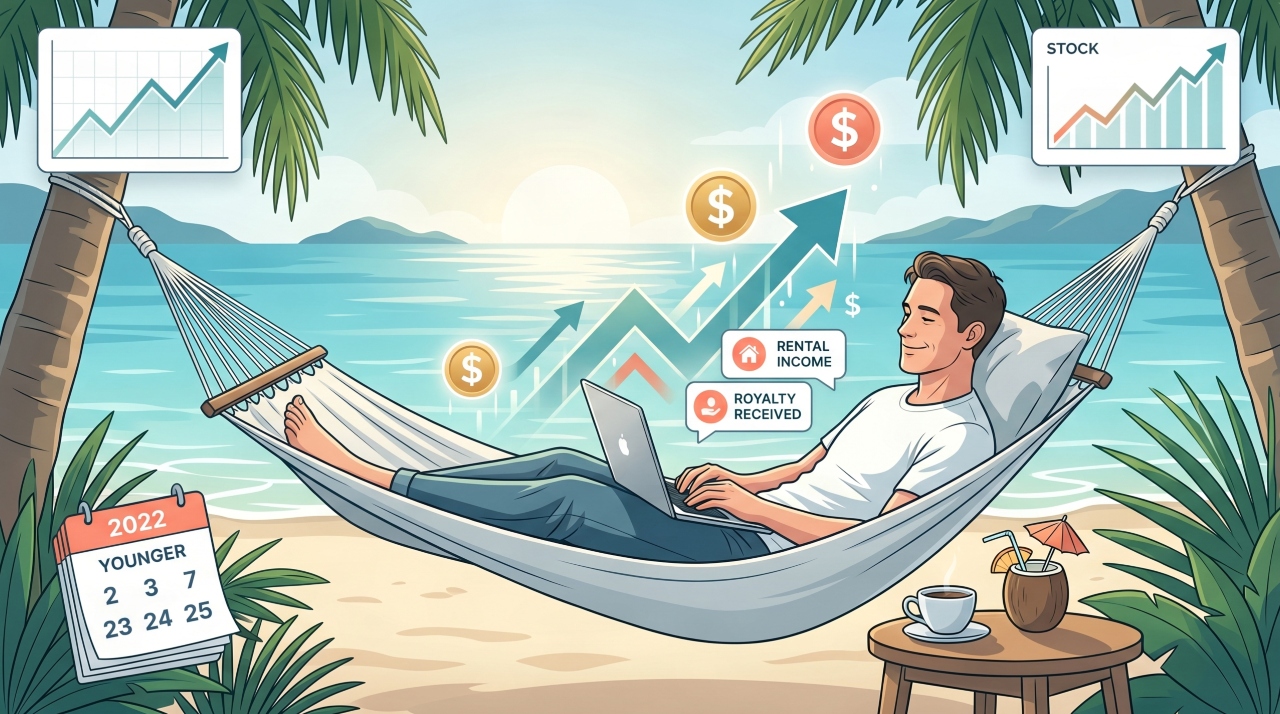
Think of it like owning a rental property, but without the broken pipes or midnight phone calls from tenants. You buy shares of a company. That company earns money. It sends some of that money directly to you. You do nothing extra to earn it after the initial purchase.
What makes dividends powerful for early retirement is the combination of two forces: income and compounding. When you reinvest your dividends back into more shares, those new shares also generate dividends. Over time, your income grows even if you never add another dollar. This is why starting early matters so much — more time means more compounding.
Not all dividend stocks are created equal. Some pay high dividends but have weak businesses behind them. Others pay lower dividends but grow them every year. The best dividend investors learn to spot the difference quickly, and this guide will help you do exactly that.
How Much Money Do You Need to Retire Early on Dividends
This is the first question most people ask, and it has a straightforward answer. You need enough invested capital to produce dividends that cover your annual expenses. The math is simple once you know your numbers.
Let’s say you spend $40,000 per year. If your portfolio earns a 4% dividend yield on average, you need $1,000,000 invested to generate that income. If your portfolio yields 5%, you need $800,000. These are real numbers that real people hit before age 50.
The key variables are your annual spending, your dividend yield, and your time horizon. Lower your spending and you need less capital. Find higher quality dividend payers and your income grows faster. Start investing earlier and time does most of the heavy lifting for you.
Many early retirees use the 4% rule as a baseline. This rule suggests that withdrawing 4% from your portfolio each year gives you a very high chance of never running out of money over a 30 year or longer retirement. Dividend investors often find this rule conservative because their dividends grow over time without needing to sell any shares.
The Two Types of Dividend Investors — Which One Are You
Before you build a portfolio, you need to decide what kind of dividend investor you want to be. There are two main approaches, and each one serves a different goal.
The first approach is called high yield dividend investing. This means focusing on stocks that pay large dividends right now. Yields of 5%, 7%, or even 10% are common in this space. Real estate investment trusts (REITs), business development companies (BDCs), and utility companies often fall into this category. The upside is that you get more income sooner. The downside is that some high yield payers cut their dividends when business gets tough.
The second approach is called dividend growth investing. This means buying companies that pay smaller dividends today but increase those payments every year. Companies like Johnson & Johnson, Procter & Gamble, and Coca-Cola have raised their dividends for 25, 50, or even 60 years in a row. The income starts smaller but grows substantially over time. Someone who bought Coca-Cola stock 20 years ago is now earning a yield on their original investment that would shock most people.
Most smart early retirement investors use a blend of both approaches. They hold some high yielders for current income and some dividend growers for long term protection against inflation. The exact mix depends on how far away you are from your retirement target date.
Building Your Dividend Portfolio From Scratch
Starting a dividend portfolio does not require a lot of money upfront. Many brokerage accounts let you buy fractional shares for as little as $1. The most important thing is to start, stay consistent, and keep learning as you go.
Step 1: Open a brokerage account. Look for platforms with no trading fees and access to dividend reinvestment plans (DRIPs). best brokerage accounts for dividend investors.
Step 2: Fund the account regularly. Treat your investment contributions like a bill you pay yourself. Even $200 per month adds up fast when dividends compound on top. After 10 years at a 7% total return, $200 per month becomes roughly $34,000. Add in dividend reinvestment and the number climbs higher.
Step 3: Pick your first stocks or funds. Many beginners start with dividend ETFs (exchange traded funds) because they offer instant diversification. The Vanguard Dividend Appreciation ETF (VIG) and the Schwab U.S. Dividend Equity ETF (SCHD) are two well known starting points. These funds hold dozens of dividend paying stocks and automatically reinvest your dividends.
Step 4: Reinvest everything. Turn on automatic dividend reinvestment for every holding. This single habit makes a massive difference over time. A portfolio that reinvests dividends will typically be worth two to three times more after 20 years than one that takes dividends as cash from the start.
Step 5: Add to your portfolio consistently. The more shares you own, the more dividends you earn. Set up automatic contributions and increase them whenever your income rises. This is called dollar cost averaging, and it takes emotion out of the process entirely.
What Makes a Good Dividend Stock
Picking individual dividend stocks takes more research than buying an ETF, but it also gives you more control. When you evaluate a dividend stock, there are five key things to check before putting any money in.
Dividend yield tells you how much annual income you earn as a percentage of the stock price. A stock trading at $100 that pays $4 per year in dividends has a 4% yield. Higher is not always better — very high yields can signal that the company is in trouble.
Payout ratio tells you what percentage of earnings the company pays out as dividends. A payout ratio below 60% is generally safe. A payout ratio above 90% means the company is paying out almost everything it earns, leaving little room for error if profits fall.
Dividend history shows whether the company has a track record of consistent payments. Look for companies that have paid and ideally raised their dividend for at least 5 to 10 consecutive years.
Earnings growth matters because dividends come from profits. A company that is growing its earnings has more room to grow its dividend. Check the earnings per share trend over the last 5 years.
Debt levels can put dividends at risk. Companies with too much debt sometimes cut dividends to pay back lenders during tough times. Look at the debt to equity ratio and compare it to industry peers.
The FIRE Movement and Dividend Investing
FIRE stands for Financial Independence, Retire Early. It is a movement that has grown rapidly over the last decade, and dividend investing sits at the center of many FIRE strategies. The core idea is to save aggressively, invest wisely, and reach a point where passive income replaces your salary.
There are several versions of FIRE. Lean FIRE means retiring on a very modest budget, often below $25,000 per year. Fat FIRE means retiring with enough income to live comfortably, usually $80,000 or more per year. Barista FIRE means covering most expenses with passive income but keeping a part time job for extras and health insurance.
Dividend investing fits all three versions. The only difference is the size of the portfolio needed and the timeline to get there. Someone targeting Lean FIRE might need $500,000 to $700,000 in dividend stocks. Someone targeting Fat FIRE might need $2,000,000 or more. Both goals are achievable with discipline, though Fat FIRE requires either higher income, lower spending, or more time in the market.
One thing the FIRE community emphasizes strongly is the savings rate. The higher your savings rate, the faster you reach your number. Someone saving 10% of their income might need 40 years to retire. Someone saving 50% of their income might need only 15 to 17 years. Pair a high savings rate with smart dividend investing and early retirement becomes a real target, not just a daydream.
Dividend Reinvestment: The Engine Behind Early Retirement
If there is one concept that separates early retirees from everyone else, it is dividend reinvestment. Most people underestimate how powerful it is. The numbers tell a story that is hard to ignore.
Imagine you invest $10,000 in a portfolio with a 4% dividend yield and 6% annual dividend growth. In year one, you earn $400 in dividends. You reinvest that $400 into more shares. In year two, those extra shares earn dividends too. By year 10, your income is no longer $400 — it is closer to $716 per year, and you never added a single new dollar. By year 20, the same $10,000 initial investment produces roughly $1,280 in annual dividends, again with zero new money added.
Now scale that up. Most people investing for early retirement are adding money consistently, not just once. The combination of regular contributions plus dividend reinvestment creates an accelerating machine. Early dividends feel small and unimpressive. Later dividends feel like a second salary arriving without any work.
The psychological challenge is staying patient during the early years. When your portfolio generates $50 per month in dividends, it is hard to feel excited. But that $50 becomes $150, then $400, then $1,000 as the years pass. Investors who stay consistent through the boring early stages are the ones who reach early retirement. Investors who quit when it feels slow never get there.
Taxes and Early Retirement Dividend Investing
Taxes are one of the most overlooked parts of dividend investing, and getting this wrong can cost you thousands of dollars per year. You need to know the basics before you start.
Dividends fall into two categories for tax purposes: qualified dividends and ordinary dividends. Qualified dividends are taxed at the lower long term capital gains rate, which is 0%, 15%, or 20% depending on your total income. Ordinary dividends are taxed as regular income, which can be much higher.
Most dividends from U.S. companies held in taxable accounts for the required holding period qualify for the lower rate. Dividends from REITs and some foreign companies often do not qualify and get taxed as ordinary income.
The account type you use makes a major difference. In a Roth IRA, your dividends grow completely tax free, and you pay no taxes when you withdraw money in retirement. In a traditional IRA or 401(k), you get a tax break now but pay taxes later. In a regular taxable brokerage account, you owe taxes on dividends each year they are earned.
A smart early retirement strategy often combines all three account types. Use tax advantaged accounts for your highest yield dividend stocks. Keep dividend growers with lower current yields in taxable accounts where annual tax bills stay small. This kind of account placement strategy, often called asset location, can meaningfully increase your after tax income without any additional risk.
Common Mistakes That Delay Early Retirement
Most people who struggle to retire early on dividends make the same mistakes. Knowing what they are upfront saves you years of lost progress.
Chasing yield is the most common error. When you see a stock paying a 12% or 15% dividend yield, it feels like free money. But yields that high usually exist because the market expects the dividend to be cut. Companies in financial trouble often trade at lower prices, which makes their yield look high on paper. When the cut happens, the stock price drops too and you lose on both fronts.
Ignoring dividend safety is closely related. Always check the payout ratio and the company’s debt load before buying. A beautiful yield from a fragile company is a trap. A smaller yield from a rock solid company is a foundation.
Selling during market crashes destroys the compounding process. Every major market decline in history eventually recovered. The investors who sold during the 2008 or 2020 crashes locked in losses and missed the recovery. Dividend investors have an advantage here because they still receive income even when prices fall, which makes it easier to hold on.
Not diversifying puts your income at risk from a single bad outcome. If you hold 30 or more dividend stocks across different industries, one dividend cut barely affects your total income. If you hold just 5 stocks and one cuts its dividend, you lose 20% of your income overnight.
Starting too late is real, but it is also not a reason to give up. Someone who starts at 40 instead of 25 will need to save more aggressively to reach the same goal. That might mean earning more, spending less, or adjusting the retirement timeline. Starting later is always better than not starting at all.
A Sample Dividend Portfolio for Early Retirement
Here is a simple example of how a beginner might structure a dividend portfolio aimed at early retirement. This is not financial advice — it is meant to show how the pieces fit together.
| Category | Example Holdings | Approximate Yield |
|---|---|---|
| Dividend Growth ETF | SCHD (Schwab Dividend ETF) | 3.5% |
| High Yield ETF | JEPI (JPMorgan Income ETF) | 7.0% |
| REITs | Realty Income (O) | 5.5% |
| Dividend Aristocrats | Johnson & Johnson, Coca-Cola | 2.5 to 3.5% |
| International Dividends | Vanguard International Dividend ETF | 3.0% |
A portfolio blending these types might produce an overall yield of 4% to 5%. On a $750,000 portfolio, that means $30,000 to $37,500 per year in passive income. Pair that with low living expenses, geographic flexibility, or a part time income stream and early retirement becomes very realistic.
The exact holdings matter less than the principles behind them: diversification, consistent dividend payment history, manageable payout ratios, and regular reinvestment during the accumulation phase.
How Long Will It Take to Retire Early on Dividends
The timeline varies widely based on income, expenses, and savings rate. But some general benchmarks help you see where you stand and where you are headed.
If you invest $1,000 per month at a 7% average annual return (combining dividends and price appreciation), you reach $1,000,000 in about 30 years. Increase that to $2,000 per month and you get there in about 21 years. Push to $3,000 per month and the timeline drops to roughly 17 years.
Starting younger makes every dollar work harder. A 25 year old investing $1,500 per month can realistically reach $1,000,000 by their mid 40s. A 35 year old doing the same would likely hit that mark by their mid 50s. Neither of those outcomes requires becoming a genius investor. Both require consistent contributions and patience.
The real accelerator is increasing your income while keeping expenses steady. Every pay raise that goes straight into your investment account cuts years off your timeline. Many early retirees report that the last few years before hitting their number feel the most exciting because the portfolio grows by more per year than they contribute from their paycheck.
Living Off Dividends in Early Retirement
Reaching your number is one milestone. Living off dividends comfortably is a different skill set. Here is what most early retirees learn once they stop working.
Spending patterns change in retirement. Some costs drop — commuting, work clothes, lunches out. Others rise — healthcare, travel, hobbies. Budget carefully before you quit and leave a buffer of at least 10% to 20% above your estimated annual spending in your income target.
Healthcare is the biggest wildcard for early retirees in the United States. Before age 65 and Medicare eligibility, you need private insurance. Marketplace plans under the Affordable Care Act are an option, and your costs depend heavily on your income level. Early retirees with lower reported income sometimes qualify for significant subsidies, which is another reason to manage your tax situation carefully.
Inflation is always working against you. A portfolio yielding 4% today might feel comfortable, but if inflation runs at 3% per year, your purchasing power shrinks over time. Dividend growth investors have a built in hedge because their dividends tend to increase faster than inflation. High yield investors with fixed dividends need to either reinvest some income or plan for a higher initial income target to account for this erosion.
Social Security still applies to early retirees, just later than expected. If you retire at 45 but worked for 20 years, you will still receive Social Security benefits when you reach eligibility age. These payments can serve as a floor beneath your dividend income in your later years, giving you an extra layer of financial security you may not have factored into your original plan.
How to Stay Motivated During the Long Accumulation Phase
Building a dividend portfolio for early retirement takes years. Motivation tends to peak at the start and again near the finish. The middle stretch, often called the “messy middle” by experienced investors, is where most people lose momentum.
Track your dividend income every month and watch it grow over time. Many early retirement investors keep a simple spreadsheet or use apps like Personal Capital or Simply Safe Dividends to monitor their progress. Seeing your monthly dividend income go from $50 to $200 to $600 over several years is genuinely motivating when you measure it consistently.
Connect with others on the same path. Online communities built around dividend investing and FIRE are active and supportive. Reddit’s r/dividends and r/financialindependence communities have millions of members sharing progress, asking questions, and keeping each other accountable.
Celebrate small milestones. The first $100 month in dividends. The first $500 month. The first $1,000 month. These markers remind you that the system is working and that you are moving in the right direction. Early retirement is not built in a single dramatic decision — it is built in thousands of small consistent actions taken over years.
Conclusion: The Path Is Clear — The Decision Is Yours
Early retirement through dividend investing is not a fantasy. It is a repeatable process that thousands of people complete every year. The math is straightforward. The tools are accessible to anyone. The timeline is defined by your savings rate, your investment choices, and your willingness to stay consistent when it feels boring.
You do not need to be rich to start. You do not need to be a stock market expert. You need a clear target, a funded brokerage account, a handful of quality dividend stocks or ETFs, and the discipline to reinvest your dividends month after month while life happens around you.
The best time to start was 10 years ago. The second best time is right now. Open your brokerage account this week. Fund it with whatever you can afford. Buy your first dividend ETF. Turn on automatic reinvestment. Then do it again next month. Every dividend you earn from this point forward is proof that the plan is working.
Your early retirement is not going to happen by accident. It is going to happen because you decided to build it — one dividend payment at a time.