
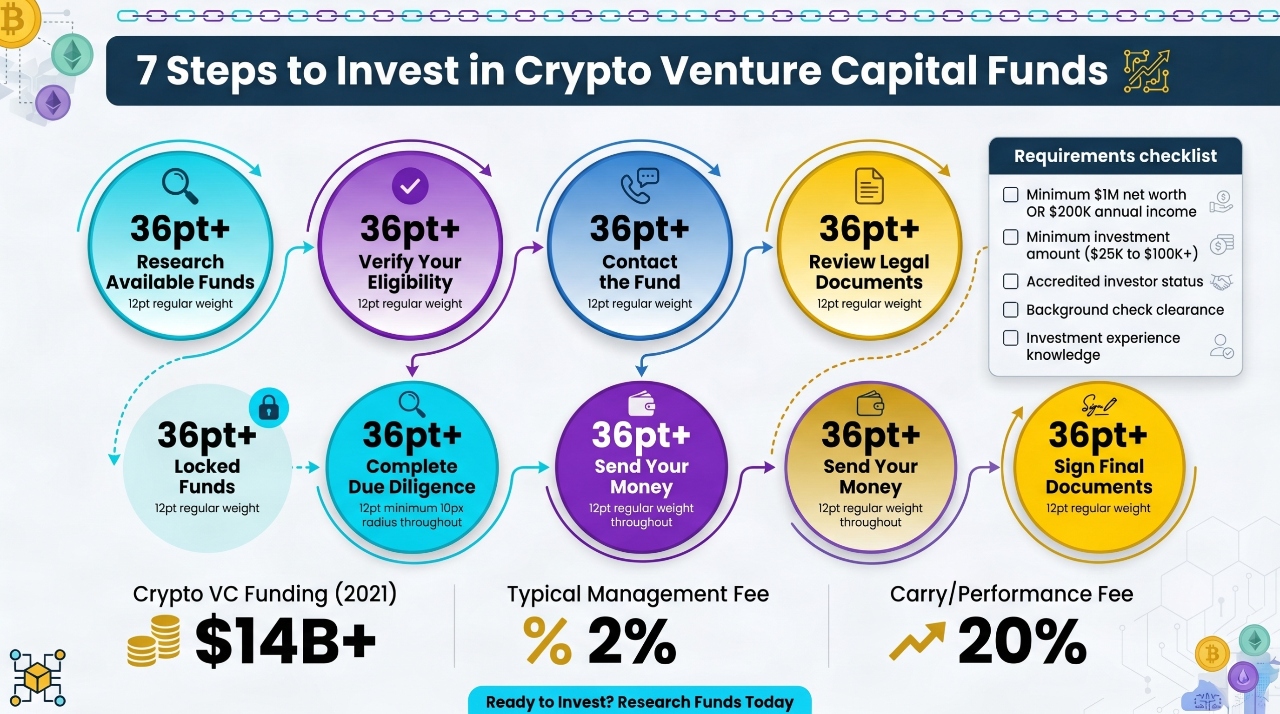
Crypto venture capital funds received over $14 billion in investments during 2021, showing how popular this type of investing has become. If you’re interested in getting into crypto but don’t know where to start, venture capital funds might be the answer. These funds let regular people invest in promising blockchain startups and cryptocurrency projects without having to pick individual coins or tokens.
Most people think investing in crypto means buying Bitcoin or Ethereum on an exchange. That’s one way to do it, but there’s another option that many smart investors are using. Crypto venture capital funds give you a chance to invest early in projects before they become huge. This article will show you exactly how to do it and what you need to know before you start.
What Is a Crypto Venture Capital Fund
A crypto venture capital fund is a pool of money that invests in early stage blockchain and cryptocurrency companies. Think of it like this: instead of putting your money directly into Bitcoin, you’re giving your money to professional investors who pick the best crypto startups.
These funds work by collecting money from many investors. The fund managers then use that money to buy stakes in new blockchain companies. When those companies succeed and grow, your investment becomes more valuable. You make money when the fund sells its stakes or when companies go public.
The managers of these funds have expertise in the crypto space. They know how to spot good projects and avoid bad ones. This is important because the crypto market is fast moving and filled with both amazing opportunities and terrible scams. Having experts manage your money reduces the risk compared to investing on your own.
Crypto venture capital funds are different from regular stock market investments. With stocks, you own a small piece of an established company. With crypto VC funds, you’re betting on projects that don’t even have products yet. This means higher risk but also potentially much higher returns.
Why People Invest in Crypto Venture Capital Funds
The main reason people invest in crypto venture capital funds is the potential for big returns. Some early investors in Bitcoin and Ethereum made hundreds of times their money. Crypto VC funds give you a chance to invest in the next generation of blockchain projects that could have similar success.
Another benefit is that professional managers do the hard work for you. Finding good crypto projects is difficult and takes a lot of research. Most people don’t have the time or knowledge to do this properly. By investing in a VC fund, you let experts handle the research while you benefit from their success.
Diversification is another big advantage. When you invest in a fund, your money gets spread across many different projects. If one project fails, you don’t lose all your money because you’re invested in dozens of others. This spreads out your risk and increases your chances of overall success.
You also get exposure to early stage blockchain companies before they become famous. If you invest when a company is young, you could get a better price than buying tokens after they launch on public exchanges. Early investors sometimes see returns of 10 times or 100 times their initial investment.
Types of Crypto Venture Capital Funds
There are several different types of crypto venture capital funds to choose from. Each type has different features and different levels of risk.
Seed stage funds focus on very early projects that are just getting started. These funds invest when companies have only an idea and a small team. The risk is very high, but returns can be extraordinary if the project succeeds.
Series A and Series B funds invest in projects that have already shown some success. These companies usually have a working product and some users. The risk is lower than seed stage but still significant. Returns are typically smaller than seed investments but more reliable.
Mega funds are large investment firms that manage billions of dollars. They invest in larger, more established crypto companies. The risk is lower, but returns are usually more modest. These funds are easier to join because they have lower minimums.
Sector specific funds focus on particular areas of blockchain technology. Some funds only invest in DeFi projects, while others focus on gaming or NFTs. These funds let you bet on specific trends you believe in.
How Crypto Venture Capital Funds Make Money
Understanding how these funds make money helps you know what to expect. Fund managers make money in two main ways.
The first way is through management fees. These are annual charges that the fund takes from all investor money. Typical management fees are 2 percent per year. This means that on a $100,000 investment, you might pay $2,000 per year in fees.
The second way is through carried interest or performance fees. When the fund makes profits by selling successful investments, the managers take a cut of those profits. This is usually around 20 percent of the gains. This aligns the managers’ interests with yours because they make more money when you make more money.
Let’s look at a real example. You invest $10,000 in a fund with a 2 percent management fee and 20 percent carry. Each year, the fund charges you $200 in management fees. Over five years, you pay $1,000 in fees. If the fund makes $5,000 profit on your investment, the managers get $1,000 of that gain and you get $4,000 plus your original $10,000 back.
This fee structure incentivizes managers to make good investments. Poor managers lose investors because people will move their money to funds with better returns.
Requirements for Getting Started
Before you can invest in a crypto venture capital fund, you need to meet certain requirements. These requirements exist to protect both investors and the fund managers.
The most common requirement is being an accredited investor. In the United States, this means you have a net worth of at least $1 million, not counting your home. Alternatively, you need to make at least $200,000 per year in income, or $300,000 if you’re married.
The most common requirement is being an accredited investor. In the United States, this means you have a net worth of at least $1 million, not counting your home. Alternatively, you need to make at least $200,000 per year in income, or $300,000 if you’re married. Accredited Investor Requirements You can verify your accredited investor status through the SEC’s official guidelines.
Some funds require even higher minimums. Many crypto VC funds have minimum investments of $25,000 to $100,000 or more. This is much higher than most stock market investments. Some mega funds have minimums of $1 million or more.
You’ll also need to provide personal information and complete background checks. Funds want to verify that you are who you say you are. They also want to make sure you’re not involved in any illegal activities.
Most funds require you to have experience with investments or crypto. They want to know that you understand the risks. You might need to sign documents saying you understand that you could lose all your money.
Step by Step: How to Invest in Crypto VC Funds
Now let’s walk through the actual process of investing in a crypto venture capital fund.
Step 1: Research Available Funds
Start by finding crypto venture capital funds that accept new investors. You can search online for “crypto venture capital funds” or ask other investors for recommendations. Look at the fund’s website and read about their investment strategy. Check what kinds of projects they invest in and what their past returns have been.
Step 2: Verify Your Eligibility
Check if you meet the requirements to invest. Do you have the minimum net worth or income? Can you afford the minimum investment amount? If you don’t qualify, you might need to wait until you have more money.
Step 3: Contact the Fund
Reach out to the fund directly through their website. Tell them you’re interested in investing. They’ll send you a packet of documents to review. These documents explain the fund’s strategy, fees, and risks.
Step 4: Review Legal Documents
Read through all the documents carefully, even though they’re long and boring. This paperwork explains everything about how the fund works. If you don’t understand something, ask questions. You might want to hire a lawyer to review the documents.
Step 5: Complete Due Diligence
Do your own research on the fund managers. Look at their track record. Have they made money in previous investments? What projects have they funded? Read articles about them online. This step takes time but is really important.
Step 6: Send Your Money
Once you’re ready, the fund will give you instructions on how to send your investment. Most funds accept wire transfers or sometimes crypto transfers. Follow their instructions carefully because sending money to the wrong place means you’ll lose it.
Step 7: Sign Final Documents
You’ll need to sign agreements confirming that you’re an accredited investor and that you understand the risks. After you sign, your money gets added to the fund and starts working.
Finding the Right Crypto Venture Capital Fund
Not all crypto venture capital funds are created equal. Some are legitimate and well managed. Others are scams or poorly run. You need to find the good ones.
Start by looking at the fund’s track record. What investments have they made? How well did those investments perform? You can often find this information on their website or in articles about them.
Look at the experience of the fund managers. Have they worked in crypto before? Do they have a good reputation? You can check their LinkedIn profiles and look for news articles about them.
Check if the fund is regulated and registered properly. In the United States, funds should be registered with the SEC or have an exemption. This provides some legal protection for investors.
Read reviews and feedback from other investors. Look on crypto forums and social media to see what people say about the fund. If many people complain about problems, that’s a red flag.
Talk to people who have invested in the fund. Ask them about their experience. How responsive are the managers? Have they communicated well about investments? Do they seem honest and trustworthy?
Consider the fund’s investment thesis. This is their explanation of why they invest in certain projects. Does their thinking make sense to you? Do you believe in their strategy?
Understanding the Risks
Investing in crypto venture capital funds involves serious risks that you need to understand before putting your money in.
The biggest risk is that you could lose all your money. Early stage startups often fail. Even with professional managers choosing the investments, some projects will go to zero. This is why you should only invest money you can afford to lose.
Crypto is volatile and unpredictable. The market can crash suddenly. Projects that look promising can turn out to be scams or just bad ideas. Regulations can change quickly and hurt certain types of projects.
You also won’t have easy access to your money. Most crypto VC funds have lock up periods of three to five years. This means you can’t pull your money out even if you need it. You’re stuck waiting for the fund to close and distribute returns.
Liquidity is another issue. When the fund wants to sell its investments, it might be hard to find buyers. This means the fund might have to sell at low prices just to get cash out.
There’s also the risk of poor management. Some fund managers are better than others. You might pick a fund run by people who make bad decisions. Always research the managers thoroughly.
Tax Implications You Should Know
Investing in crypto VC funds has tax consequences that many people don’t think about until tax time.
In the United States, capital gains from crypto investments are taxable. If your investment grows from $10,000 to $50,000, you owe taxes on that $40,000 gain. The tax rate depends on how long you held the investment.
If you hold the investment for less than one year, it’s taxed as short term capital gains. These rates are high because they’re treated like ordinary income. Your tax bracket could be as high as 37 percent.
If you hold the investment for more than one year, it’s taxed as long term capital gains. These rates are lower, usually 15 to 20 percent. This is one reason to hold investments for longer periods.
Management fees are sometimes tax deductible, but this depends on your situation. Keep careful records of all fees you pay.
Other countries have different tax rules. If you live outside the United States, research how your country taxes crypto investments.
Keep detailed records of all your investments and sales. You’ll need this information when you file taxes. Many people make mistakes on their taxes because they didn’t keep good records.
Real World Examples of Crypto VC Funds
Looking at actual crypto venture capital funds can help you understand how they work.
Polychain Capital is one of the oldest and most respected crypto VC funds. Founded in 2016, Polychain has invested in hundreds of blockchain projects. Their investments have included successful projects that made significant returns for investors. They focus on infrastructure and protocol level investments.
Sequoia Capital entered the crypto space and now manages crypto venture funds. Sequoia is a famous traditional venture capital firm that has invested in Apple, Google, and many other huge companies. Their entry into crypto shows how serious institutional money is becoming about blockchain.
Andreessen Horowitz (a16z) created a crypto focused venture fund. This is another legendary venture capital firm jumping into crypto. They’ve invested billions in blockchain projects. Their involvement helps legitimize crypto as an investment class.
Pantera Capital focuses specifically on digital assets and blockchain. They run multiple crypto focused funds. Pantera has been bullish on crypto for many years and has made successful investments.
These funds all have different approaches and different results. Some have made fantastic returns for investors. Others have underperformed. This shows why research is so important.
Alternative Ways to Invest in Crypto Startups
If crypto venture capital funds don’t work for you, there are other ways to invest in blockchain startups.
You can buy tokens directly when they launch on exchanges. Many startups issue tokens that people can buy. This gives you exposure to the company’s success. The downside is that it’s riskier because you’re not getting the professional selection that venture funds provide.
Equity crowdfunding platforms let regular people invest in startups. Some platforms like Reg.CF allow you to buy actual equity shares in startups. This is less common in crypto but it’s starting to happen more.
You can also join angel investor groups. These are groups of wealthy individuals who pool money to invest in startups. Membership requirements vary, but you need to be accredited.
Crypto index funds and ETFs give you broad exposure to the crypto market. These are easier to access and have lower minimums. You don’t get the early stage startup exposure, but you get exposure to established cryptocurrencies.
How to Manage Your Crypto VC Portfolio
Once you’ve invested in crypto venture capital funds, you need to manage your investment over time.
Track your investments carefully. Keep records of what you invested, when you invested, and how much. Record any distributions you receive. This information matters for taxes and for knowing how well you’re doing.
Stay updated on the fund’s activities. Most funds send quarterly or annual reports explaining what they’ve invested in and how the fund is performing. Read these reports even though they’re sometimes technical and boring.
Don’t panic when markets crash. Crypto is volatile and prices go down sometimes. Remember that venture capital is a long term investment. Short term price movements don’t matter much.
Diversify across multiple funds if you can. Investing all your money in one fund is risky. If you have enough money, spread it across three to five different funds with different investment strategies.
Rebalance occasionally. If one investment has grown much larger than others, you might want to adjust. But be careful about moving money because you’ll have to pay fees.
Red Flags and Scams to Avoid
The crypto space unfortunately has many scams. You need to know what to watch for.
Guaranteed returns are a huge red flag. No legitimate investment can guarantee returns. If someone promises you will make a certain amount of money, they’re lying.
Pressure to invest quickly is another warning sign. Legitimate funds don’t pressure people. They let you take time to make decisions. If someone is pushing you to invest right now, run away.
Unlicensed or unregistered funds are dangerous. Check that the fund is properly registered with financial regulators in your country. Unregistered funds might steal your money.
Unknown managers with no track record should worry you. Research the fund’s history. Can you find articles about them? Do they have a reputation in the industry? Legitimate funds have history and reputation.
Promises that they’ve found the “next Bitcoin” are nonsense. Nobody knows which projects will succeed. Anyone claiming they’ve discovered a sure thing is either lying or delusional.
Lack of transparency is a problem. Good funds explain clearly how they invest and what they’re doing with your money. If a fund won’t answer questions or explain their strategy, that’s suspicious.
Getting Professional Help
This is complex and important, so it’s worth getting professional advice.
A financial advisor who specializes in alternative investments can help you. They can review funds and help you decide which ones fit your situation. They can also help you figure out how much to invest.
A lawyer who knows about crypto and investment law is valuable. They can review documents before you sign them. They can explain things you don’t understand. The cost is worth it if they catch problems.
A tax professional who understands crypto is essential. They can help you manage the tax consequences of your investments. They can make sure you’re not making costly mistakes.
These professionals aren’t cheap, but they can save you from serious problems. Bad decisions with crypto ventures can cost you tens of thousands of dollars. Paying a few thousand for professional advice is smart.
Conclusion
Investing in crypto venture capital funds is a serious financial decision that can offer real benefits but also carries real risks. The potential to invest in early stage blockchain projects and earn significant returns attracts many investors. However, you need to be prepared for losses and understand what you’re getting into.
The process of investing in crypto VC funds isn’t difficult once you understand the steps. You need to find funds, verify you’re eligible, do research on the managers, and send your money. The hard part is doing proper due diligence to find good funds and avoid scams.
Remember that this type of investment requires patience. Most crypto VC funds lock up your money for years. You’re betting on the future success of projects that might not even exist yet. This is high risk and high reward investing.
Before you invest, make sure you understand the risks and have money you can afford to lose completely. Do thorough research on any fund you’re considering. Talk to professionals who can give you specific advice for your situation. Start with smaller amounts if you’re new to this.
The crypto venture capital space is still developing. New and better funds are being created all the time. Take your time, do your homework, and only invest when you’re confident. If you do these things, crypto VC investing can be an exciting part of your overall investment portfolio.